Fifty Years in Wall Street
Henry Clews · 1908
5.0 · 5 ratings
About the book
Half a century on the Street from a banker who saw it all first-hand: Civil War finance, Black Friday, Drew against Vanderbilt, corners, panics and philanthropists. Clews is gossipy, self-satisfied and irreplaceable — the memoir of Wall Street's entire gilded age.
Try the short course
Part 1 · A dry-goods clerk walks in. The first six slides, free.


1 / 6
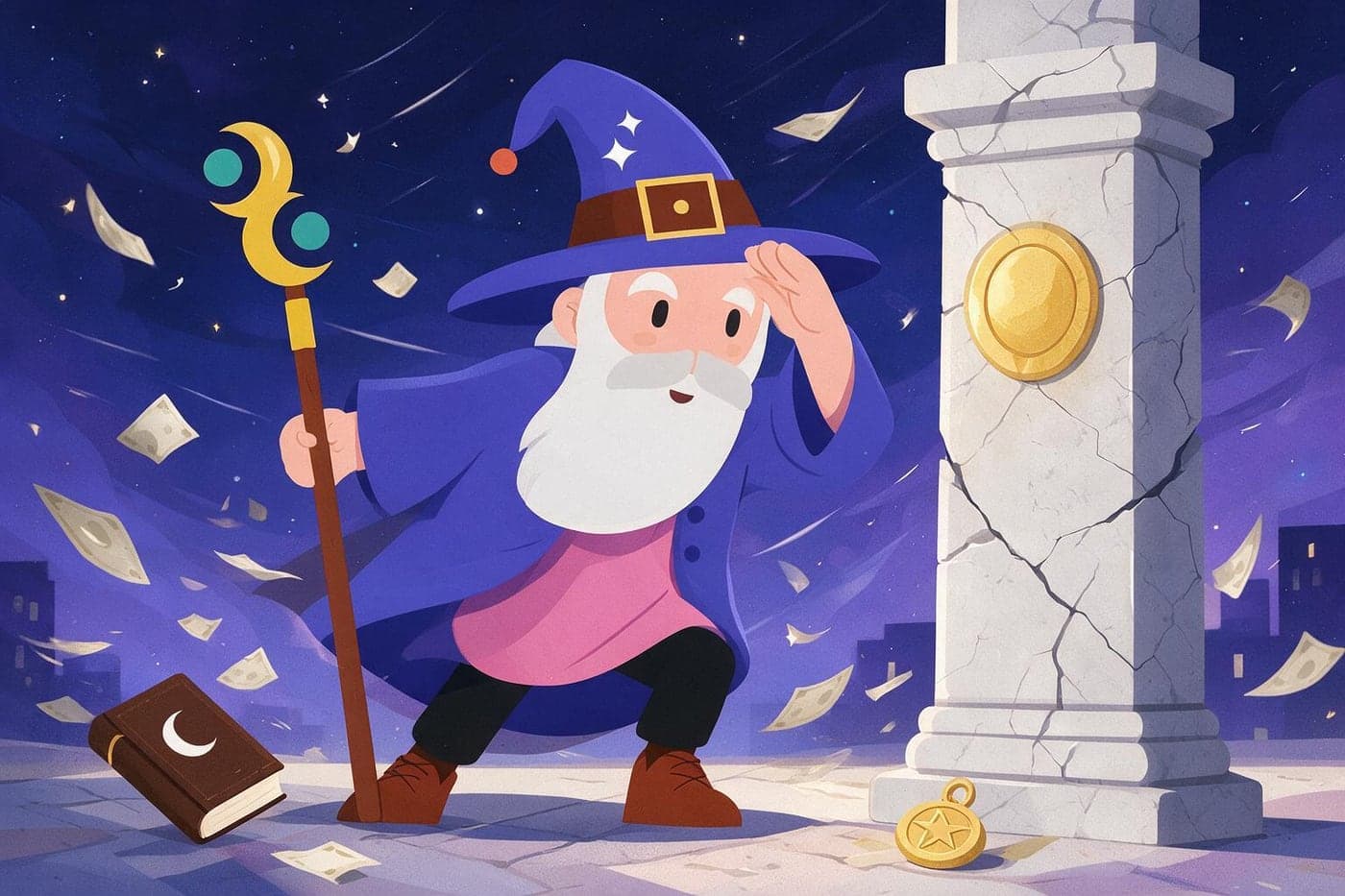
In 1857 a storm came in from the West. The Ohio Life and Trust Company, a giant of its day with an office on Wall Street, failed, and business froze almost overnight. Large firms that had ridden out every earlier gale went down after it.
Clews lists the causes plainly: too many imported goods, railroads built fast on borrowed money, a bad harvest that left the country unable to pay for its imports in produce, and bank credit stretched thin everywhere. In October the New York banks suspended payments.
On the Stock Exchange, prices fell fifty per cent in a few days, and a large share of the brokers were forced into liquidation. The Street called it the Western blizzard. Clews, then a young man still outside the Exchange, watched it clear the ground in front of him.
Read this preview as text
In 1857 a storm came in from the West. The Ohio Life and Trust Company, a giant of its day with an office on Wall Street, failed, and business froze almost overnight. Large firms that had ridden out every earlier gale went down after it.
Clews lists the causes plainly: too many imported goods, railroads built fast on borrowed money, a bad harvest that left the country unable to pay for its imports in produce, and bank credit stretched thin everywhere. In October the New York banks suspended payments.
On the Stock Exchange, prices fell fifty per cent in a few days, and a large share of the brokers were forced into liquidation. The Street called it the Western blizzard. Clews, then a young man still outside the Exchange, watched it clear the ground in front of him.
Here is how Clews reads what the blizzard did. The old conservative element fell and never rose again, a younger generation took its seats, and the whole upheaval was “a fine exemplification of the survival of the fittest.” Looking back, he calls the panic, on the whole, a great gain.
Notice who is talking. Clews was one of the young men the crash let through the door, and he wrote this decades later as a rich banker. His preface promises a plain, unvarnished tale, and he means it, but it is the tale of a winner.
That does not make him wrong. It makes him a witness with a stake. The book reads best when you hold both halves at once: he really was there, and he would very much like you to see it his way.
In Clews's telling, what was the most lasting change the panic of 1857 made on Wall Street?
- It moved control of American finance from New York to the Western banks
- It made the Exchange much stricter about admitting young men without patrons
- It swept out the old conservative leaders and let younger men take their placesCorrect answer
- It ended heavy speculation in railroad shares for most of the next decade
Clews treats the crash as the end of old conservative rule and the rise of a younger generation of financiers. The Exchange did stay hard to enter for a while, but he presents that as the old guard's last resistance, not as the panic's legacy.
The survivors did not open the doors gladly. In the 1850s it was taken for granted that money, like medicine and law, belonged to old men. Clews mocks the belief that no doctor was safe unless his bald head and wrinkled brow showed he was nearly past feeling any sympathy at all.
On the Exchange that prejudice had teeth. Senior members treated a young man's application as an impertinent intrusion on their rights, and without powerful, wealthy patrons it was next to impossible to get in. Clews calls them a mutual admiration league that fought newcomers tooth and nail.
He knew this from the waiting room. He was working in the dry goods importing trade, where he had learned business, and the Exchange kept him out for several years.
So he stopped asking. The standard commission for buying or selling stock was an eighth of one per cent each way. Clews put an advertisement in the newspapers offering to do the same work for a sixteenth.
Half price, in public, from a man the club had turned away. By his own account the offer was “such a bombshell in the camp of these old fogies that they were almost paralyzed.” Worse for them, customers followed the arithmetic: the members lost business, and Clews steadily gained it.
Nothing about his skill had changed, and nothing about their rules. What changed was the price. He forced the door with a price the old members could not match without giving up the comfortable income their exclusivity protected.
Clews was finally admitted to the Stock Exchange after he advertised that he would buy and sell stocks for half the commission its members charged.
TrueCorrect answer
True. He offered a sixteenth of one per cent against the members' eighth, took their customers, and they admitted him. The door opened because of the price, not because the old members changed their minds about young men.
Inside the course
20 parts- A dry-goods clerk's debut in Wall StreetFree above
- Wall Street as a civilizer: Clews answers the pulpit
- How to make money in Wall Street, by one who did
- Business training, and why gentlemen's sons make bad clerks
Questions
Is Fifty Years in Wall Street free to read in Astra Trainer?
Yes. The full book opens free in the app’s reader, in English, Spanish, German, French, Italian, Portuguese, and Russian.
What is the short course?
20 short parts that walk through the book’s key ideas in slides, each with a quick quiz. The first six slides are free to try on this page.
Where do I get the app?
Astra Trainer is free on the App Store and Google Play. Fifty Years in Wall Street is waiting in the app’s library.