
The Golden Sayings of Epictetus
Epictetus (trans. Hastings Crossley) · 1902
5.0 · 4 ratings
About the book
A lamed slave became Rome's freest man, and his students wrote down how: one hundred and eighty-nine sayings on what is in our power and what is not. Crossley's Golden Treasury selection is the friendliest doorway into Stoicism ever printed.
Try the short course
Part 1 · The slave who taught emperors. The first six slides, free.


1 / 6
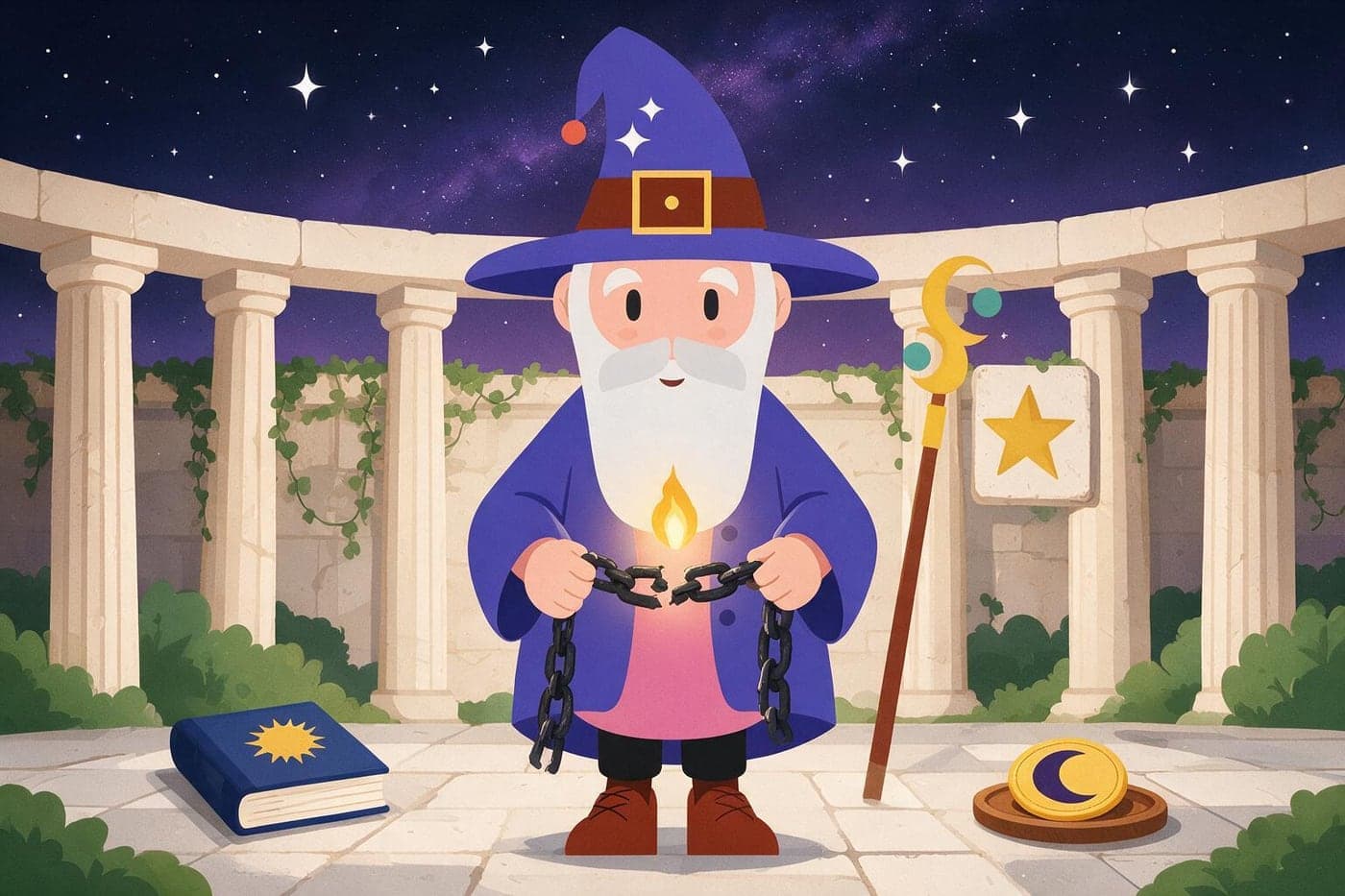
The man behind these sayings was property. Epictetus was born around 50 CE in Hierapolis, in what is now western Turkey, and even his name is a slave's label: in Greek it simply means "acquired".
His owner was Epaphroditus, a freedman who had risen to serve as secretary to the emperor Nero. So the boy grew up in a household that lived by the moods of the palace, where everyone around him was either angling for favour or afraid of losing it.
Keep that in mind as you read. When this book tells you that nobody can own your will, it is not a comfortable theory worked out in a library. It is the report of a man who had been owned.
Read this preview as text
The man behind these sayings was property. Epictetus was born around 50 CE in Hierapolis, in what is now western Turkey, and even his name is a slave's label: in Greek it simply means "acquired".
His owner was Epaphroditus, a freedman who had risen to serve as secretary to the emperor Nero. So the boy grew up in a household that lived by the moods of the palace, where everyone around him was either angling for favour or afraid of losing it.
Keep that in mind as you read. When this book tells you that nobody can own your will, it is not a comfortable theory worked out in a library. It is the report of a man who had been owned.
Epaphroditus turns up in the book himself, and not flatteringly. In saying XL, Epictetus remembers how his old master sold a shoemaker called Felicion as good-for-nothing. By some accident Felicion was bought by one of Caesar's men and became shoemaker to the emperor.
Suddenly Epaphroditus could not do enough for him. "How does the good Felicion? Kindly let me know!" The man he had sold as useless was now someone he consulted.
Epictetus watched this from below, as the slave nobody asked. His verdict is one line: this is what comes of holding anything important but the will. The shoemaker had not changed at all. Only his distance from power had, and a rich, powerful man rearranged his whole respect around it.
In saying XL, what does Epictetus conclude from watching Epaphroditus fawn over Felicion, the shoemaker he had once sold?
- That prizing anything outside the will makes a person servileCorrect answer
- That real skill is always recognised in the end, even at court
- That powerful men should be forgiven for serving their interests
- That a slave's worth rises once he finds a better master
Epictetus says this is what comes of valuing things that do not depend on the will. Felicion's skill never changed; what changed was his nearness to Caesar, and the rich master bowed to it, which makes him the servile one.
While he was still a slave, Epictetus was allowed to study with Musonius Rufus, the most respected Stoic teacher in Rome. Rufus appears in saying V with a line that tells you exactly what kind of classroom it was: "If you have leisure to praise me, what I say is naught."
In other words, if you walk out admiring the lecture, the lecture failed. Epictetus remembers that Rufus described their behaviour so precisely that each student sitting there assumed somebody had gone to Rufus and reported on him.
That is the tone Epictetus inherited, and you will hear it all through this book. He is not trying to be liked. He is trying to lay his finger on your actual deeds, and he assumes that is what you came for.
Epictetus was lame, and he mentions it without fuss. In the very first saying of Crossley's selection he asks: "What else can I that am old and lame do but sing to God?"
How he became lame, the sayings never say. A story told by later writers has his master twisting his leg while Epictetus calmly warned him it would break, and then, when it broke, remarking that he had said so. Other ancient sources say he was simply lame from illness. Enjoy the famous version as a legend, not a fact.
What the book does give you is better than either story. He does not treat his body as a grievance. A nightingale does the work of a nightingale, he says, and a swan the work of a swan; a reasoning being sings to God. That is my post, and he means to hold it.
Epictetus's teacher Rufus held that if his students had leisure to praise him, his teaching had failed.
TrueCorrect answer
True. In saying V, Rufus treats applause as a sign that he missed: his aim was to expose each student's faults so exactly that nobody had attention to spare for admiring him.
Inside the course
12 parts- The slave who taught emperors: Epictetus's storyFree above
- What is in our power, and what is not
- On dealing with tyrants — and other inconveniences
- The banquet: take what is passed to you
Questions
Is The Golden Sayings of Epictetus free to read in Astra Trainer?
Yes. The full book opens free in the app’s reader, in English, Spanish, German, French, Italian, Polish, Portuguese, and Russian.
What is the short course?
12 short parts that walk through the book’s key ideas in slides, each with a quick quiz. The first six slides are free to try on this page.
Where do I get the app?
Astra Trainer is free on the App Store and Google Play. The Golden Sayings of Epictetus is waiting in the app’s library.