

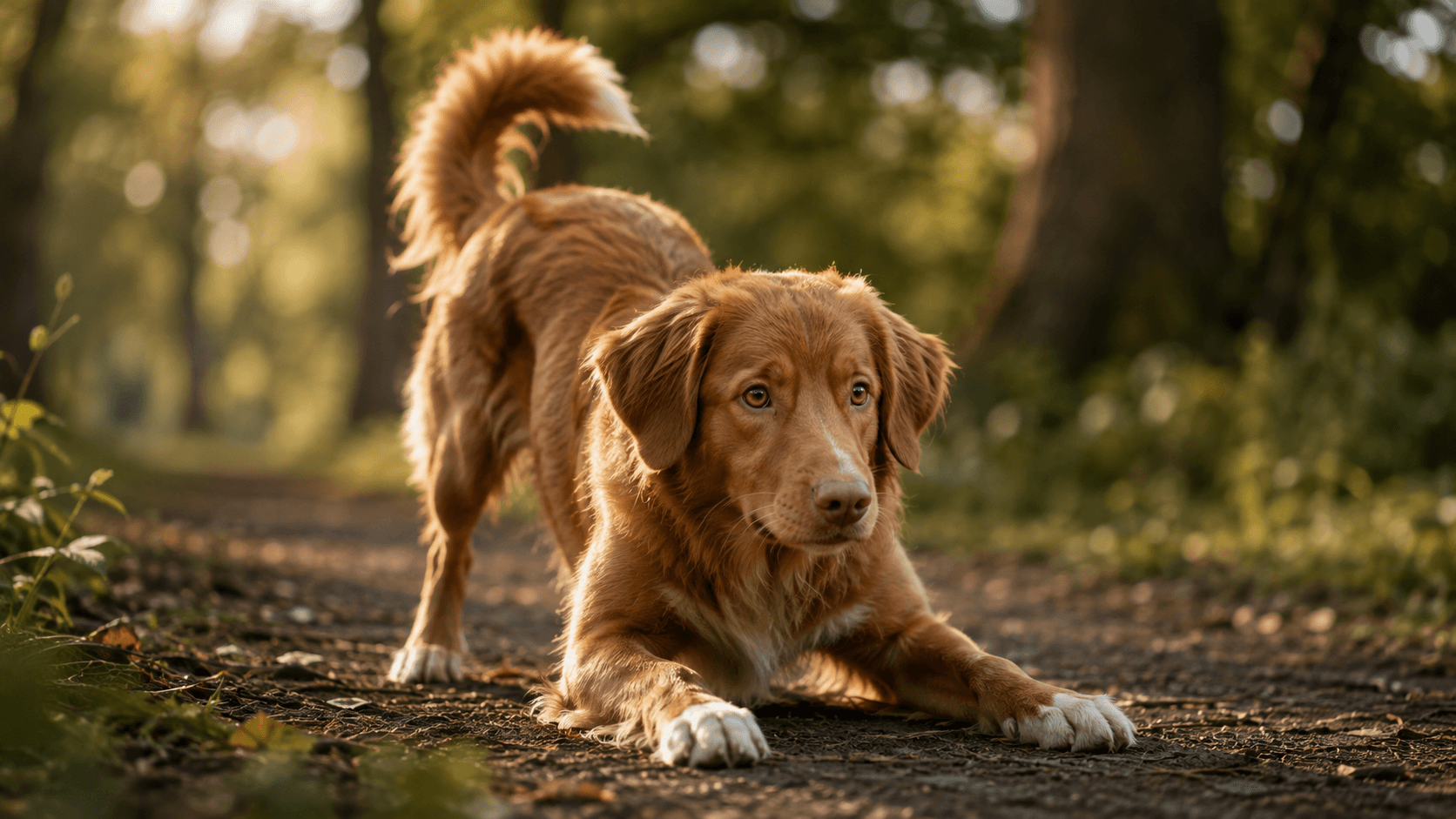
Your dog is talking to you all day. A tail carriage, a shift in weight, an ear that flicks half an inch — a running commentary on how it feels about everything happening around it. Most of it goes unread, and research out of Arizona State University helps explain why: people tend to judge a dog's emotional state by the situation surrounding it rather than by the dog itself, and layer their own feelings on top for good measure. You see a birthday party and read "happy." You see a vet's office and read "nervous." The dog might be feeling the opposite of either, and the actual signals were there the whole time.
Learning to read those signals isn't about spotting danger — that's its own subject, and this article isn't a rewrite of it. This is the full, everyday vocabulary: what relaxed looks like, what curious looks like, what mildly unsure looks like, long before anything resembles a crisis.
Why do people misread their own dogs?
Because most of us default to context and projection instead of actually looking at the animal. The Arizona State research, led by researchers Holly Molinaro and Clive Wynne, tested this directly and found that people's read of a dog's emotional state shifted based on the surrounding scene, even when the dog's own behavior stayed the same. The setting did the interpreting; the dog's actual signals were almost beside the point.
Layered on top of that is anthropomorphizing — assigning human emotional logic to a nonhuman animal that communicates through an entirely different system. A dog isn't smiling when its mouth looks relaxed and open in a photo. It might be. It might also be panting from heat, or holding tension nobody's looking for. The fix isn't complicated, but it does require a shift in habit: watch the dog, not the scene it's standing in.
What parts of the body actually carry the signal?
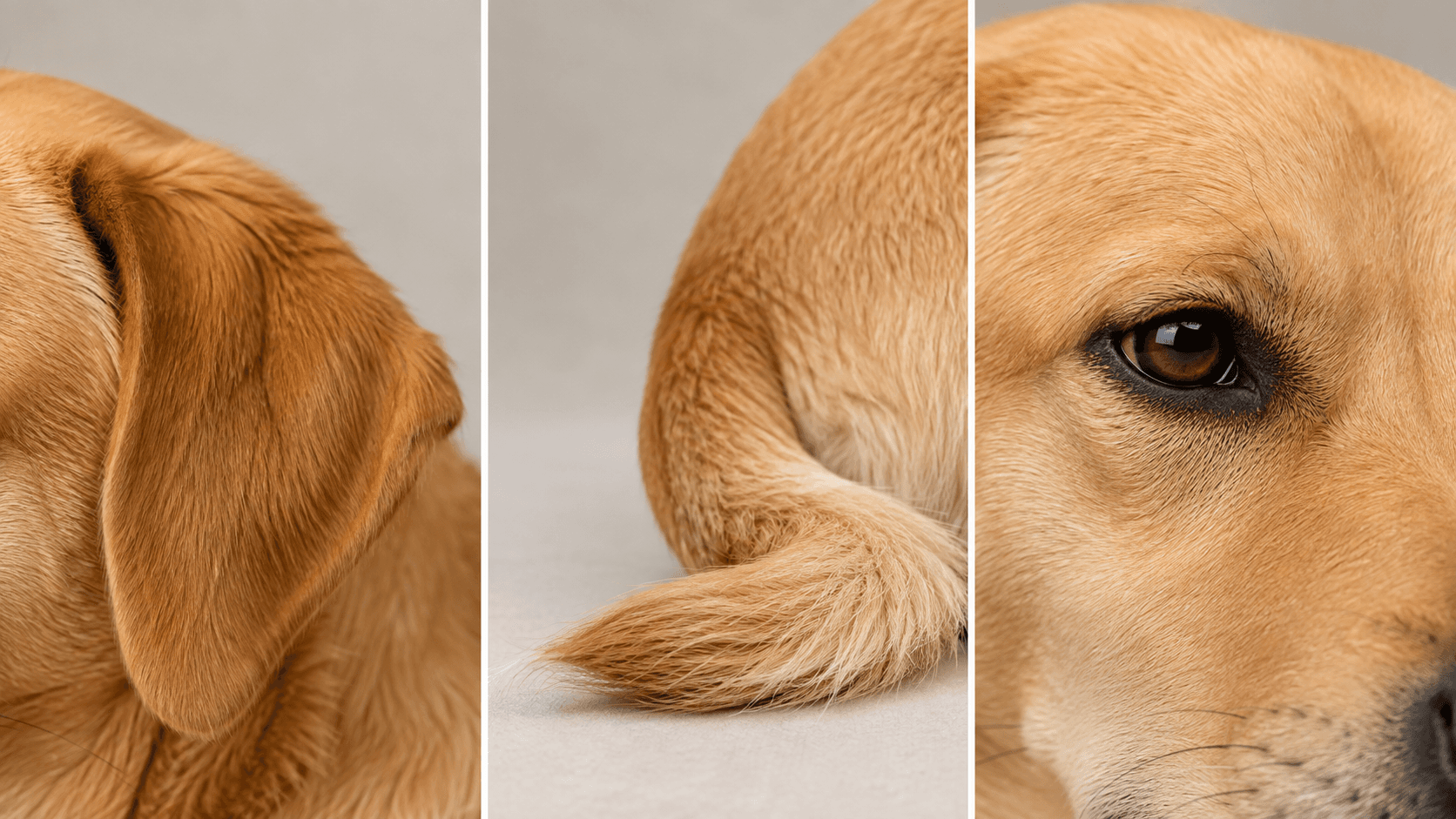
Almost the whole animal, but a handful of areas carry most of the useful information: the tail, the ears, the eyes, the mouth, overall body weight and posture, and the coat.
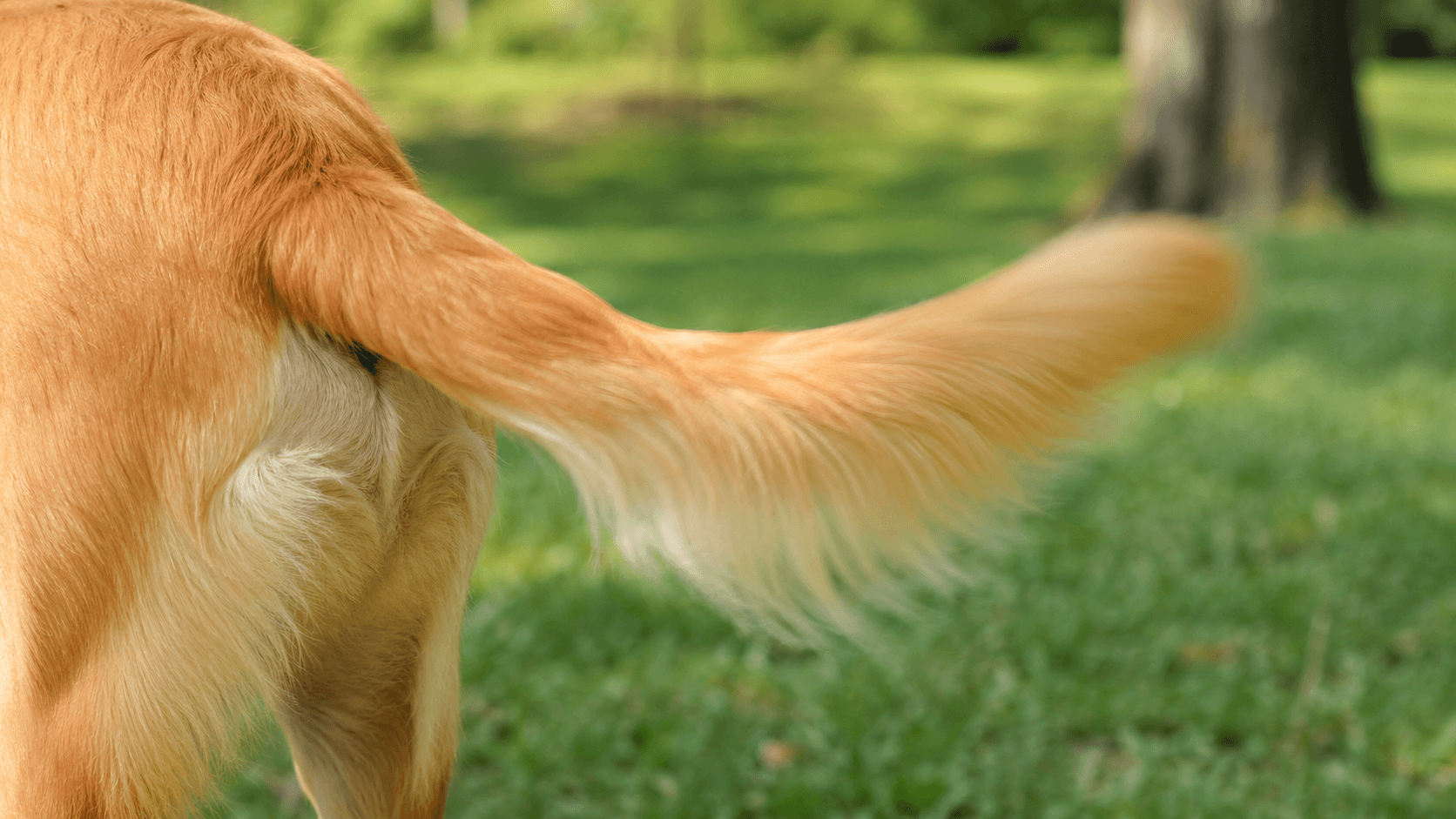
- Tail. Position and speed both matter, and neither alone tells the whole story — a tail held level or slightly below the back's line, moving in a loose, wide sweep, generally reads as relaxed. Tucked reads as fear or submission. High, stiff, and vibrating fast is arousal, and arousal isn't automatically friendly.
- Ears. Forward and alert signals interest. Pinned flat back usually signals fear or appeasement. Ear position varies by breed and ear shape, so it's worth learning what a specific dog's neutral, relaxed ear position actually looks like before reading deviations from it.
- Eyes. Soft, slightly squinted eyes generally read as relaxed. A hard, fixed stare is tension. Dilated pupils beyond what lighting explains often indicate stress or arousal. And "whale eye" — the head turned away while the eyes stay locked on something, showing the white crescent at the corner — is one of the more reliable stress signals in the entire vocabulary.
- Mouth. A loose, slightly open mouth with a relaxed tongue generally reads as calm. A mouth clamped shut, or lips pulled tightly back, tends to indicate tension.
- Weight and posture. Weight distributed evenly, a loose and bouncy gait, generally reads as comfortable. Weight shifted backward, a lowered body, or a stiff, frozen stance all point the other way.
- Coat. Raised hackles — piloerection along the spine — signal arousal, not necessarily aggression. It can appear during excitement, fear, or genuine threat, which is why it's read alongside everything else rather than on its own.
What does a genuinely relaxed dog look like?
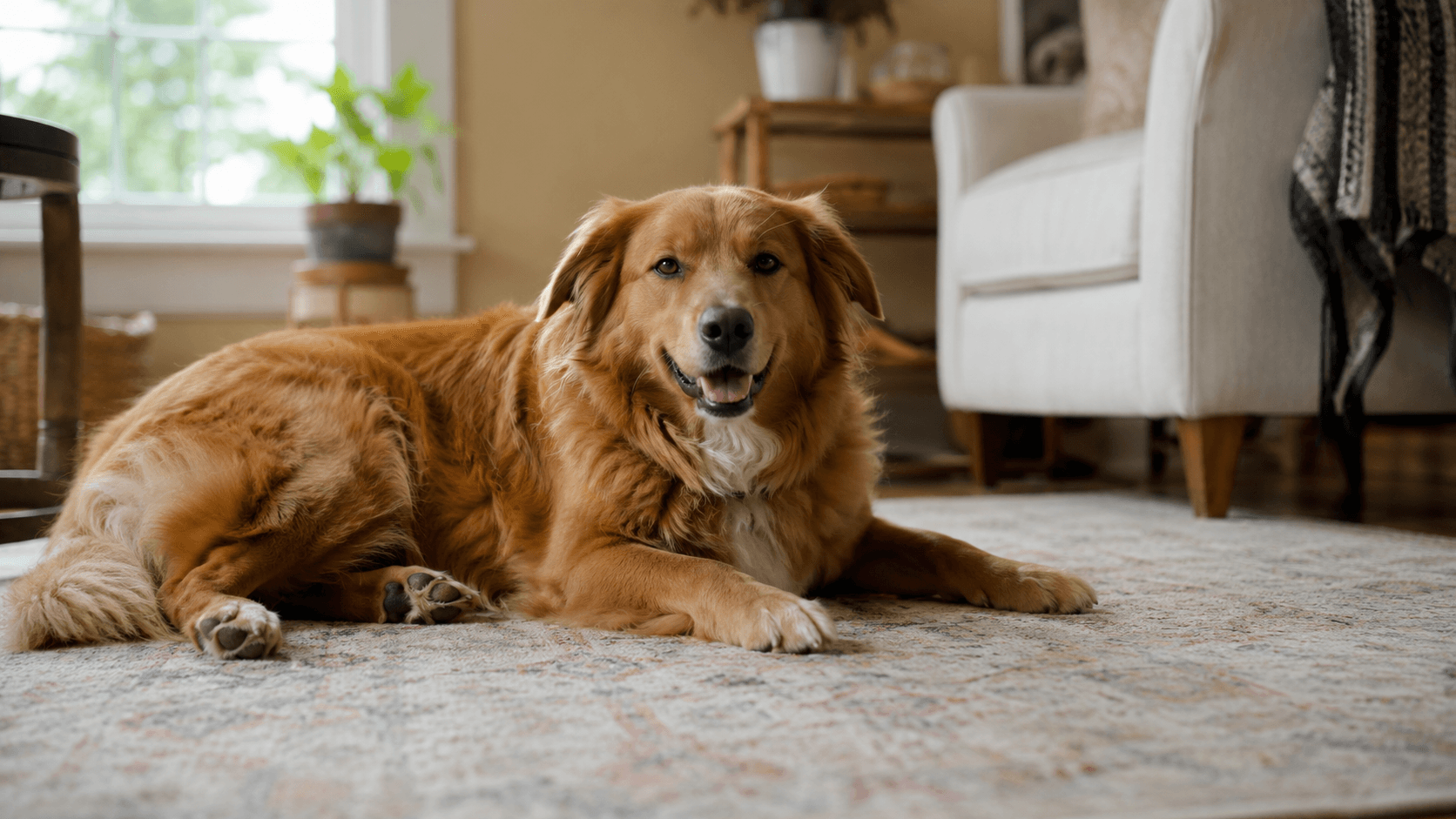
Loose, soft, and asymmetrical. A relaxed dog's body has no held tension anywhere — the mouth is slightly open, the ears sit in their natural resting position, the tail moves in a wide, loose wag or hangs naturally, and the weight is evenly distributed rather than braced in any direction.
The single best tell for genuine relaxation is looseness. A relaxed dog's body has no held tension anywhere you can point to.
Movement matters as much as any single posture: a relaxed dog shifts weight easily, doesn't hold any one position rigidly, and responds to its surroundings without a delay. A dog that looks "calm" but is holding completely still is worth a second look — stillness and relaxation are not the same thing, and telling them apart is one of the more valuable skills in this entire subject.
Check yourselfA stranger leans in to greet your dog. The dog yawns although it is not tired, licks its lips although there is no food, then turns its head away and sniffs the pavement at nothing. Before reading on, say what those three gestures are doing.Show the answerHide the answer
They are calming signals: gestures a dog uses to lower tension in itself, in another dog or in a person, and to head off conflict before it starts. They are not an emergency, and they turn up constantly in perfectly ordinary situations. Turid Rugaas named the set, and dogs whose signals get respected tend to need fewer of them over time.
What are calming signals, and what do they mean?
Calming signals are a set of specific gestures dogs use to lower tension — in themselves, in another dog, or in a person — and to head off conflict before it starts. The term comes from Turid Rugaas, whose work cataloguing these signals gave owners a vocabulary for behavior that had previously gone unnamed and mostly unnoticed.
Common calming signals include turning the head or body away, licking the lips or nose without food present, yawning outside of tiredness, sniffing the ground with no apparent target, moving slowly and deliberately, and the play bow — front end lowered, rear end up — which can signal both an invitation to play and, in some contexts, an attempt to defuse tension.
These signals show up constantly in ordinary situations that aren't remotely dangerous — a dog meeting a new person, two dogs greeting on a walk, a vet visit. They're not an emergency signal. They're closer to a dog's version of saying "let's keep this easy," and dogs that get their calming signals respected tend to need fewer of them over time.
Reading these signals reliably takes more than a written list — it's the kind of thing that clicks faster with real examples than with descriptions. Astra Trainer's Dog Language direction is built around exactly that: twelve short courses on posture, stress cues, and dog-to-dog signals, using real photos and video of actual dogs rather than diagrams alone.
What does a stressed or uncomfortable dog look like?
Tighter, stiller, and less symmetrical than a relaxed dog, generally. Common signals include a tucked tail, ears pinned back, a lowered or crouched body, whale eye, lip licking without food, yawning outside of tiredness, and panting that doesn't match the temperature or activity level.
Veterinarian Sophia Yin, whose visual reference materials on this subject became something close to an industry standard, made a point worth remembering: a dog that looks "well-behaved" and a dog that's frozen in a stress response can look nearly identical to someone who hasn't learned the difference. Stillness, in particular, gets read as calm far more often than it should be. The fuller escalation pattern, and where it leads if the stress isn't recognized, is covered in detail elsewhere — this article is about recognizing the state, not what comes after it.
There's a separate, quieter version of this worth naming too: a dog whose stress is specifically about a person leaving, rather than the general situation. That pattern — distress tied to one particular departure rather than the environment — is its own distinct subject with its own signals, worth reading separately if that's what you're noticing.
Does a wagging tail always mean a happy dog?
No, and this might be the single most common misread in the entire subject. A wag communicates arousal — an activated emotional state — and arousal can mean delight, excitement, anxiety, frustration, or the lead-up to something else entirely. The wag itself doesn't specify which.
Speed and height carry more information than the wag's presence. A loose, wide, slow-to-medium wag around the body's natural tail line tends to accompany genuine friendliness. A high, stiff, fast, narrow wag — sometimes described as vibrating rather than swinging — tends to accompany a more activated, less certain state. The rest of the dog — ears, weight, mouth — is what tells you which kind of wag you're looking at.
How do dogs read human body language?
Differently than we assume, and often more accurately than we read theirs. Cognitive researcher Alexandra Horowitz, whose work focuses on how dogs actually experience the world, has written extensively about how much of a dog's perception runs through smell rather than sight — an entire dimension of information humans don't have access to at all, layered underneath whatever visual signals we're sending.
On the visual side, applied animal behaviorist Patricia McConnell has pointed out that gestures humans intend as affectionate — direct eye contact, leaning over a dog, a full frontal hug — can register to a dog as something closer to a physical challenge or a restraint, depending on the dog and the context. None of this means affection is unwelcome. It means the specific form matters, and a dog's response to a hug or a stare is a real signal worth watching rather than an inconvenience to override.
What is the most commonly misread signal?
Stillness, without much competition. A dog holding motionless gets read as calm, obedient, or simply resting far more often than the state actually deserves, and the two things — genuine calm and a frozen stress response — can look almost identical from the outside without the surrounding context.
Here's a quick reference for some of the pairs owners most often mix up:
| Signal | Common human read | What it more often means |
|---|---|---|
| Fast, high tail wag | Happy, excited | Aroused — could be excitement, anxiety, or overstimulation |
| Holding completely still | Calm, well-behaved | Frozen — often a stress response, worth a closer look |
| Yawning | Tired | Frequently a stress or calming signal, especially outside of sleepy contexts |
| "Smiling" open mouth | Happy | Sometimes accurate, sometimes just an open, panting mouth unrelated to mood |
| Showing belly | Wants a belly rub | Sometimes, but can also be an appeasement or submission display, not an invitation |
| Direct eye contact from a person | Affectionate | Can register to some dogs as a challenge or pressure, depending on context |
Watch your own dog this week
Ticked: 0 of 6
Two or three ticks is where most owners start. The list is really a way of catching yourself reading the scene instead of the animal, which is the habit the Arizona State work describes.
What to do next
None of this requires memorizing a checklist to apply in real time — it's closer to learning a new language you already hear constantly, where the words start to stand out once you know what you're listening for. Watch the dog itself before the situation around it, notice when stillness might be tension rather than calm, and treat a wagging tail as one clue among several rather than the whole answer.
Test yourself
Question 1 of 3
A dog comes toward you with its tail held high, wagging fast and narrow, almost vibrating. Its weight is forward and its mouth is clamped shut. What does the wag itself tell you?
Why do people misread their own dogs?
Research shows people judge a dog's emotional state by the surrounding situation rather than the dog's actual behavior — the setting does the interpreting, not the signals. Anthropomorphizing compounds this by assigning human emotional logic to signals that work differently in dogs.
What parts of a dog's body carry the most signal?
Tail, ears, eyes, mouth, overall weight and posture, and coat. No single one tells the whole story — position, speed, and context all need reading together, and neutral positions vary by breed.
What does a genuinely relaxed dog look like?
Loose, soft, and asymmetrical, with no held tension anywhere. Movement matters as much as posture — a relaxed dog shifts weight easily and responds without delay. Stillness is not the same as relaxation.
Does a wagging tail always mean a happy dog?
No. A wag signals arousal, which can mean excitement, anxiety, frustration, or overstimulation. Speed and height carry more information than the wag's presence — a loose wide wag differs meaningfully from a high, fast, stiff one.
What is the most commonly misread signal in dogs?
Stillness. A dog holding motionless is frequently read as calm or well-behaved when it's actually a frozen stress response — genuine relaxation and a frozen state can look nearly identical without the surrounding context.