The Art of Public Speaking
J. Berg Esenwein & Dale Carnegie · 1915
5.0 · 7 ratings
About the book
The correspondence-school course where Dale Carnegie's whole career began: confidence before an audience, the sin of monotony, pause and power, and how to grow a vocabulary. Still the most complete speaking manual in the public domain.
Try the short course
Part 1 · Stage fright and the full glass. The first six slides, free.


1 / 6
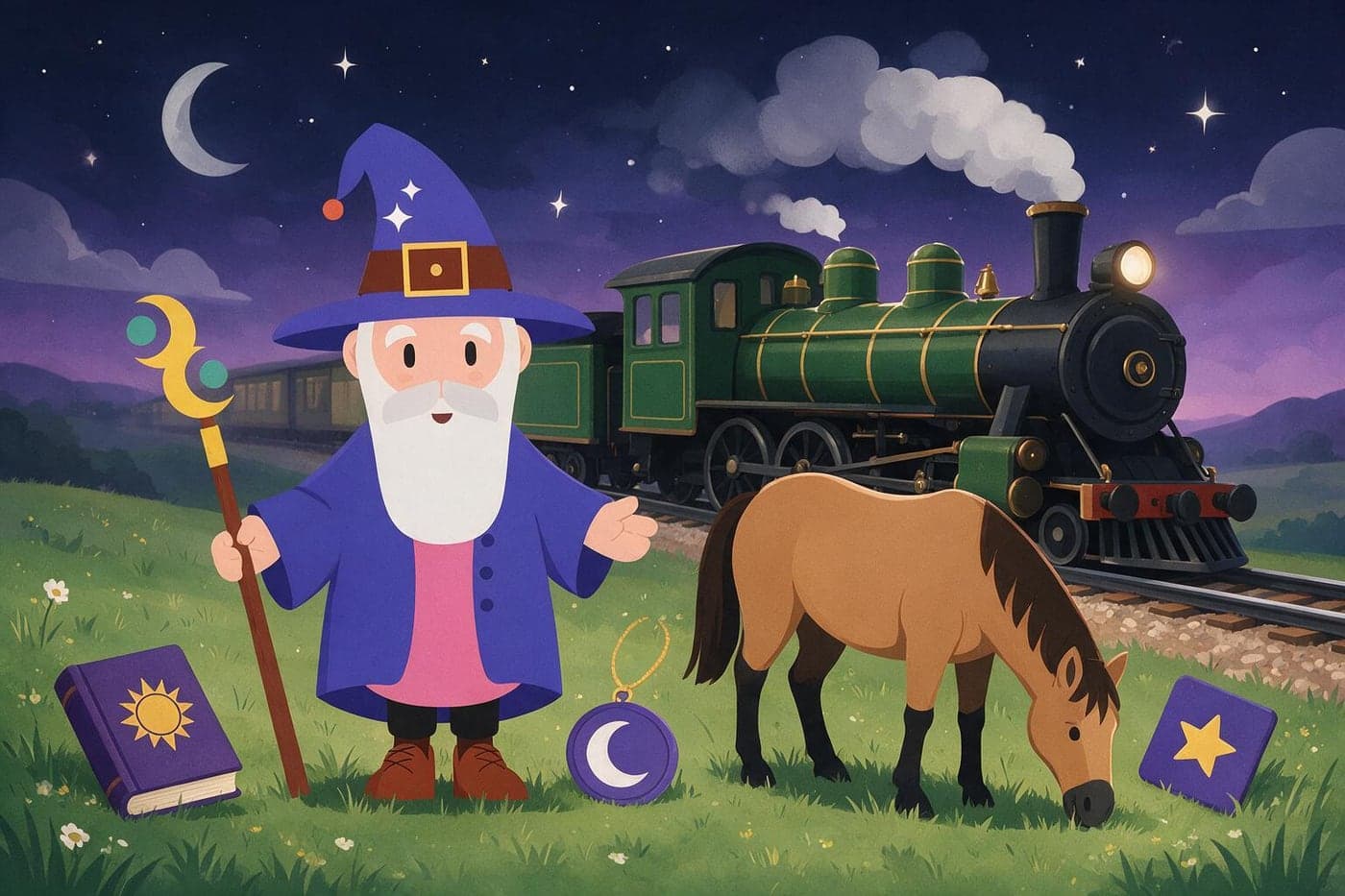
Look out of a train window and you may notice two kinds of horses. Some graze right beside the track and never lift their heads as the cars thunder past. A little further on, at a crossing, a farmer's wife is struggling to calm a horse that rears at the very same noise.
The difference is not courage. One horse has seen a thousand trains; the other hardly ever sees one. Nobody cures a shy horse by pasturing it in a back-woods lot where no engine ever passes.
The authors ask you to apply that same horse-sense to your fear of audiences. The remedy is not a calmer temperament or a better pep talk. It is to face an audience as often as you can, until the thundering cars are simply part of the landscape.
Read this preview as text
Look out of a train window and you may notice two kinds of horses. Some graze right beside the track and never lift their heads as the cars thunder past. A little further on, at a crossing, a farmer's wife is struggling to calm a horse that rears at the very same noise.
The difference is not courage. One horse has seen a thousand trains; the other hardly ever sees one. Nobody cures a shy horse by pasturing it in a back-woods lot where no engine ever passes.
The authors ask you to apply that same horse-sense to your fear of audiences. The remedy is not a calmer temperament or a better pep talk. It is to face an audience as often as you can, until the thundering cars are simply part of the landscape.
Here is where most people get it backwards. They wait to feel confident before they speak, as if confidence were a ticket you buy in advance. The book says the order runs the other way: you learn to speak by speaking, and confidence arrives afterwards, as a by-product.
The authors compare it to swimming. A book can tell you how to hold yourself in the water, but sooner or later you have to get wet, and maybe swallow a mouthful and feel half scared to death. The seaside is full of fashionable "wetless" bathing suits, they note, and nobody has ever learned to swim in one.
So reading about stage fright, this lesson included, will not remove it. Reading can prepare you for the plunge. The plunge itself nobody can take for you.
A friend says she will start volunteering to speak at meetings once she feels less nervous. What would the book tell her?
- Wait until the nerves settle, then start with small groups
- Speak now and often; the nerves fade through the speakingCorrect answer
- Read up on stage fright first, so the fear loses its mystery
- Rehearse alone until the talk is perfect, then face people
The book's cure is exposure: like the horse grazing by the track, you stop shying by facing audiences again and again. Waiting, reading or rehearsing in private all keep her in the back-woods lot where the horse never meets a train.
Do not take early fear as proof that you are not cut out for this. The authors name serious speakers who struggled with it: Daniel Webster failed at his first appearance and sat down without finishing, Gladstone was often self-conscious as he began, and Beecher was always perturbed before talking in public.
They even turn the fear into a kind of credential. A fool is never hurt by facing an audience, they write, because he has little capacity for feeling, and a champion racehorse suffers more than a worn-out dray horse. The higher you go in the scale of life, they say, the greater the capacity for suffering.
What they will not allow is surrender. The bravest people know fear; they simply do not yield to it. The goal is not a speaker who feels nothing. It is a speaker whose knees quake, and who makes them stop.
The book suggests that a speaker who suffers badly from stage fright may simply have a greater capacity for feeling than one who suffers not at all.
TrueCorrect answer
True. The authors say a fool is untroubled by an audience because he feels so little, and that the higher we go in the scale of life, the greater the capacity for suffering. The fear is something to master, not a verdict on your ability.
Blacksmiths had an old trick for shoeing a restless horse: twist a rope tight around its nose. The small pain pulls the horse's attention away from the hammering. And one way to get the air out of a glass, the authors add, is to pour in water.
Both images describe the same mechanism. "Concentration is a process of distraction from less important matters." You cannot empty your mind of fear by trying hard not to think about it. You can crowd the fear out by filling your mind with something heavier.
On the platform, that something is your material. It is too late to worry about the cut of your coat once you are up there. Fill your mind with your speech-material, and like the water in the glass, it drives the flimsy fears out.
Inside the course
20 parts- Acquiring confidence before an audienceFree above
- The sin of monotony
- Emphasis, subordination, and change of pitch
- Change of pace, and pause and power
Questions
Is The Art of Public Speaking free to read in Astra Trainer?
Yes. The full book opens free in the app’s reader, in English and Russian.
What is the short course?
20 short parts that walk through the book’s key ideas in slides, each with a quick quiz. The first six slides are free to try on this page.
Where do I get the app?
Astra Trainer is free on the App Store and Google Play. The Art of Public Speaking is waiting in the app’s library.