A Message to Garcia
Elbert Hubbard · 1899
4.7 · 7 ratings
About the book
A one-evening essay about a soldier who took the message through without asking a single question — and became, overnight, the most reprinted call to initiative in business history. Forty million copies before Hubbard went down with the Lusitania.
Try the short course
Part 1 · A letter for a missing general. The first six slides, free.


1 / 6

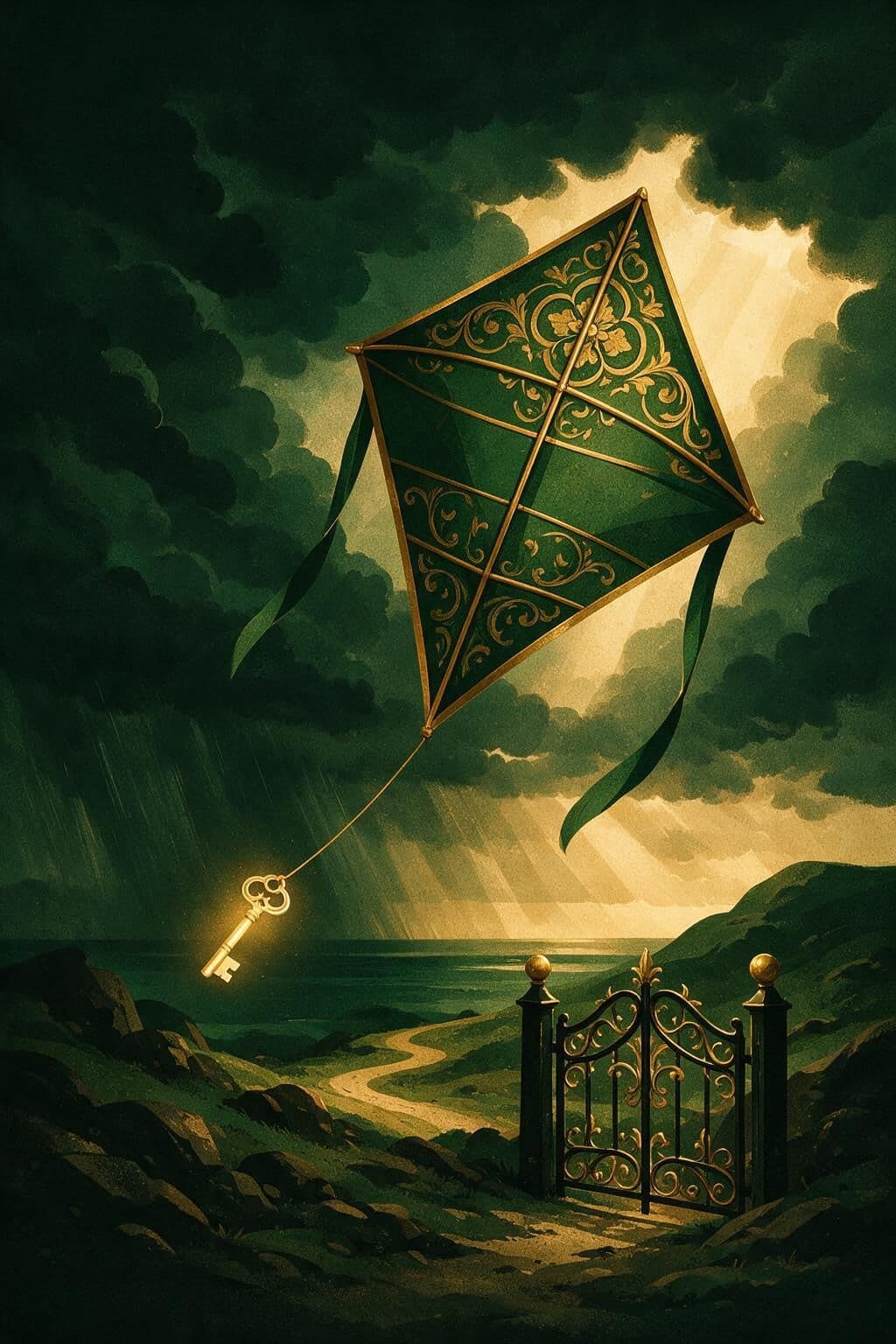
Hubbard does not open with a war. He opens with a proverb: “As the cold of snow in the time of harvest, so is a faithful messenger to them that send him.”
Picture a field hand in the heat of harvest and a handful of snow on the back of his neck. That is what a reliable messenger feels like to the person who sent him: sudden, unlikely relief.
So before a single fact about Cuba, you already know what kind of story this is. Not a battle story. A story about being sent, and about the rare person who, once sent, actually arrives.
Read this preview as text
Hubbard does not open with a war. He opens with a proverb: “As the cold of snow in the time of harvest, so is a faithful messenger to them that send him.”
Picture a field hand in the heat of harvest and a handful of snow on the back of his neck. That is what a reliable messenger feels like to the person who sent him: sudden, unlikely relief.
So before a single fact about Cuba, you already know what kind of story this is. Not a battle story. A story about being sent, and about the rare person who, once sent, actually arrives.
The history Hubbard needs fits in a breath. In 1898 the United States went to war with Spain over Cuba, where Cuban insurgents had been fighting Spanish rule for years. Their leader in the field was General Garcia.
The President needed Garcia's co-operation, and he needed it quickly. An army about to land on the island wants to know what the people already fighting there will do.
That is all the war the essay uses, and all you need. Hubbard says one man from that whole Cuban business stands out in his memory like Mars at its closest and brightest. The war is only the stage for one errand.
Now the problem itself. Garcia was somewhere in the mountains of Cuba, and nobody knew where. Then comes the line that shuts every door: “No mail or telegraph message could reach him.”
Sit with how strange that is. The man who wants to send the letter is the President of the United States. He commands an army and a navy, and he cannot get one sheet of paper to one general on an island just off his own coast.
Hubbard ends the paragraph with a short, almost comic cry: “What to do!” Every ordinary channel has failed. Power does not reach the mountains, and when no channel is left, the only thing you can send is a person.
In Hubbard's setup, what makes getting the letter to Garcia so hard?
- The Spanish had already captured every messenger sent to him
- Nobody knew where he was, and no mail or telegraph reached himCorrect answer
- The President was forbidden to contact rebel leaders directly
- Garcia had refused to answer earlier letters from Washington
Hubbard makes the difficulty a matter of location and route: Garcia was somewhere in the mountains and every normal channel had failed. There are no captured messengers and no refusals in his account; the obstacle is the unknown, not an enemy's decision.
Here is the whole job interview, as Hubbard tells it. Someone said to the President: “There is a fellow by the name of Rowan will find Garcia for you, if anybody can.”
Look at what that sentence leaves out. No rank, no list of achievements, no plan for how it will be done. And look at what it puts in. Rowan is not recommended as brave, or clever, or well connected. He is recommended as someone who will find: a man known for getting through when nobody knows the way.
Even the praise is hedged. If anybody can. Nobody promises success. What the speaker vouches for is that if it can be done, he will.
Hubbard keeps that offhand phrase and puts it in quotation marks: “the fellow by the name of Rowan.” Not Lieutenant Rowan, not the daring Rowan. A fellow with a name.
The choice is doing work. If Rowan were a famous commander or a genius of espionage, his story would be something to admire from a safe distance. As a fellow, he stands much closer to you: a man with no special aura, whose only distinction is what he does with a letter.
The real Andrew Rowan was an army lieutenant who had made a study of Cuba. Hubbard leaves all of that out, because the essay is not a biography. It is a portrait of a type, and a type is something anyone can become.
Inside the course
10 parts- Rowan is handed a letter for GarciaFree above
- «How the fellow by the name of Rowan took the letter»
- The clerk who asks six questions and does nothing
- Correggio: the encyclopedia test
Questions
Is A Message to Garcia free to read in Astra Trainer?
Yes. The full book opens free in the app’s reader, in English, Spanish, German, French, Italian, Polish, Portuguese, and Russian.
What is the short course?
10 short parts that walk through the book’s key ideas in slides, each with a quick quiz. The first six slides are free to try on this page.
Where do I get the app?
Astra Trainer is free on the App Store and Google Play. A Message to Garcia is waiting in the app’s library.