The Book of War
Sun Tzu & Wu Tzu (trans. E. F. Calthrop) · 1908
5.0 · 4 ratings
About the book
The Art of War as it first reached English whole: Sun Tzu's thirteen articles and Wu Tzu's sayings, translated by a British artillery captain who died in the war he studied. Twenty-five centuries of strategy in an afternoon's reading.
Try the short course
Part 1 · Count before you fight. The first six slides, free.


1 / 6
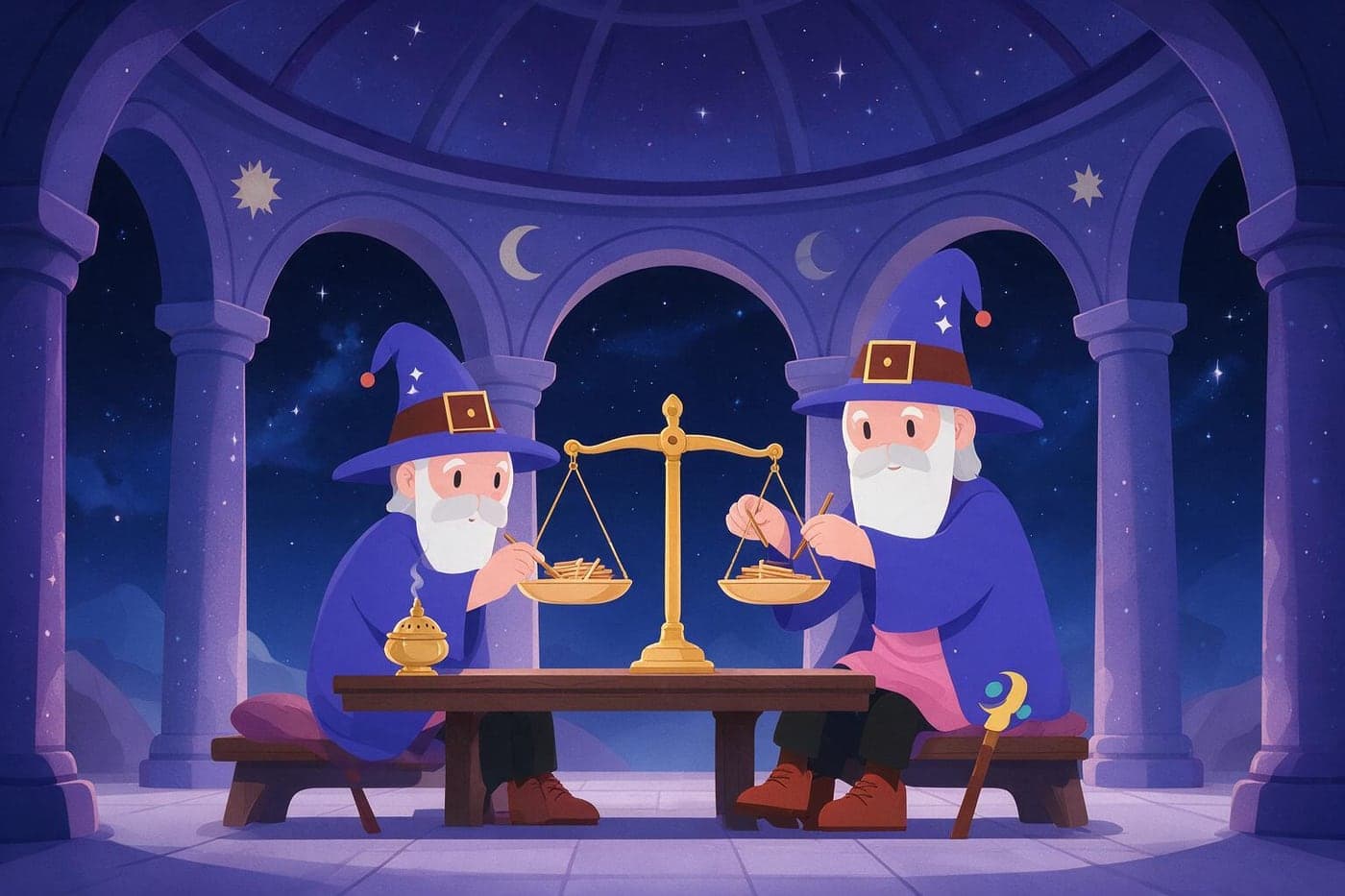
Sun does not open with a trick. He opens with weight: war is a great matter for every nation, the thing on which the life or death of the state depends. Because the stakes are that high, it has to be studied, and studied before anyone moves.
Then he tells you where the studying happens. "At the reckoning in the Sanctuary before fighting, victory is to the side that excels." Before a single soldier marches, the ruler and his generals sit in the temple and count.
That is the claim the whole chapter rests on. The battle is not where the outcome is made; it is where the outcome shows up. In Sun's account, most of the winning is decided before anything moves, at a quiet table, by whoever does the arithmetic well.
Read this preview as text
Sun does not open with a trick. He opens with weight: war is a great matter for every nation, the thing on which the life or death of the state depends. Because the stakes are that high, it has to be studied, and studied before anyone moves.
Then he tells you where the studying happens. "At the reckoning in the Sanctuary before fighting, victory is to the side that excels." Before a single soldier marches, the ruler and his generals sit in the temple and count.
That is the claim the whole chapter rests on. The battle is not where the outcome is made; it is where the outcome shows up. In Sun's account, most of the winning is decided before anything moves, at a quiet table, by whoever does the arithmetic well.
The count begins with five matters: the Way, Heaven, Earth, the Leader and Law. Know them, Sun says, and you conquer; fail to know them, and you are defeated.
Notice what comes first. Not weapons, not numbers, not a clever plan. The Way, in Calthrop's rendering, is the proper conduct of man. When the ruling authority is upright, the people are united, and they will put their lives at its service without fear of danger.
So before Sun asks how strong an army is, he asks whether the people behind it believe in the ones giving the orders. A divided side has already lost something no drill can put back. The list starts with people, and everything after it leans on that first answer.
Heaven and Earth are the conditions nobody at the table controls. Heaven is Yin and Yang, heat and cold, time and season. Earth is distance, the nature of the terrain, its extent and its strategic position.
Sun does not ask you to change any of this. He asks you to put it in the count. An army that marches in the wrong season, or across too much distance, has picked a fight with the weather and the map before it ever meets the enemy.
You know the modern version. The product launched the week the market froze; the expansion planned without asking how far away the new site really is. Nobody lied. They simply left out what felt like background. Sun treats background as evidence: what you cannot change, you must read.
In Sun's list of five matters, what does the first one, the Way, measure?
- Whether upright rule keeps the people unitedCorrect answer
- The distance and position of the ground ahead
- The season, the weather and Yin and Yang
- How cunning the plan agreed by the generals is
The Way is the proper conduct of man: upright authority makes a united people who face danger without fear. Season and weather belong to Heaven, distance and position to Earth, and Sun sets stratagem apart from the five matters altogether.
The Leader is weighed on five qualities: intelligence, truth, benevolence, courage and strictness. Courage is on the list, but it comes fourth, after the ability to see clearly, to be trusted and to care for people. A bold commander who cannot be believed does not pass the count.
Law sounds like the dullest entry and may be the most practical one. Calthrop gives it as the partition and ordering of troops: how the whole is divided, who answers to whom, who does what when the order comes.
Sun places plain organisation on the same footing as Heaven and the Way. When you tally your side's chances, structure counts as strength. A brilliant leader standing over a muddle is a weaker side than it looks from the outside, and weaker than it feels from the inside.
A list of virtues is easy to admire and useless on its own. Sun's next move turns it into a tool: "the condition of the enemy must be compared with our own."
He adds seven matters to weigh side by side. The virtue of the prince. The ability of the general. Natural advantages. The discipline of the armies. The strength of the soldiers. Their training. And justice, both in reward and in punishment.
Every item is a question with two answers, one for each camp. Your general is able; is theirs abler? Your troops are strong; are theirs better trained? A strength never set against the other side is only a feeling. In the Sanctuary nothing counts until it is compared, which is how a proud army can leave an honest reckoning knowing it should stay home.
Inside the course
12 parts- The preliminary reckoning: count before you fightFree above
- Operations of war: what campaigns cost
- The attack by stratagem — winning without battle
- The order of battle
Questions
Is The Book of War free to read in Astra Trainer?
Yes. The full book opens free in the app’s reader, in English, French, Portuguese, and Russian.
What is the short course?
12 short parts that walk through the book’s key ideas in slides, each with a quick quiz. The first six slides are free to try on this page.
Where do I get the app?
Astra Trainer is free on the App Store and Google Play. The Book of War is waiting in the app’s library.