Autobiography of Andrew Carnegie
Andrew Carnegie · 1920
4.9 · 7 ratings
About the book
From bobbin boy at a dollar twenty a week to the richest man in the world, then the harder project of giving it all away. Carnegie's own telling — telegraph office, steel, Homestead, libraries — and still the best rags-to-riches ledger ever balanced.
Try the short course
Part 1 · A weaver's son in Dunfermline. The first six slides, free.


1 / 6
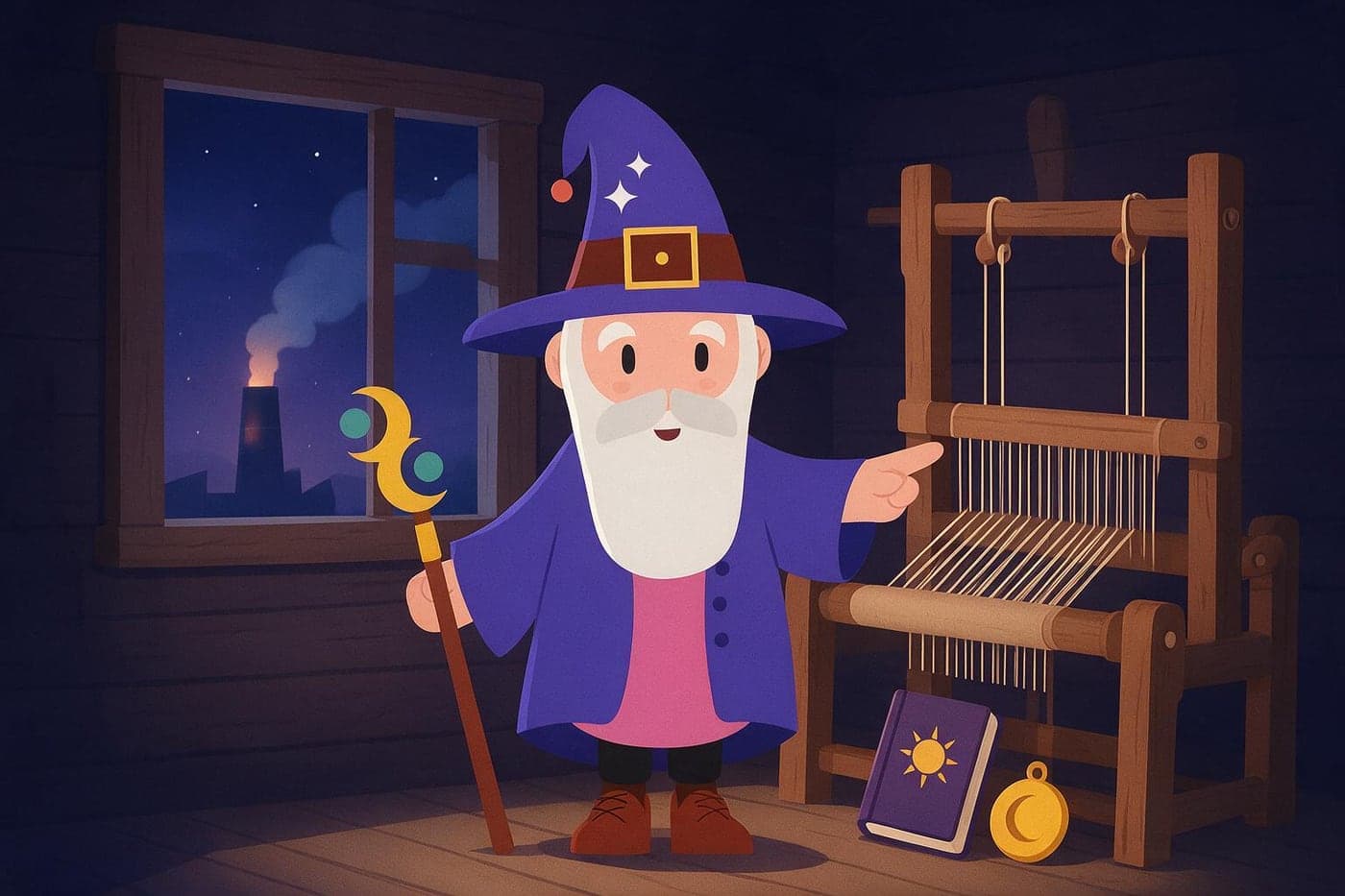
Picture a boy in Dunfermline watching his father carry the last finished web of damask to the big manufacturer. At home his mother waits to hear whether there will be a new web, or a stretch of idleness with nothing coming in.
William Carnegie was a skilled handloom weaver, one of the town's small masters who owned his own looms and worked at home. Then the steam loom arrived. His son says plainly that he did not see the revolution coming, and his looms sank in value while he kept working the old way.
Andrew borrowed Burns for what he saw: a decent man made to "beg a brother of the earth to give him leave to toil." It was burnt into his heart, he writes, and the resolve to cure that came then and there.
Read this preview as text
Picture a boy in Dunfermline watching his father carry the last finished web of damask to the big manufacturer. At home his mother waits to hear whether there will be a new web, or a stretch of idleness with nothing coming in.
William Carnegie was a skilled handloom weaver, one of the town's small masters who owned his own looms and worked at home. Then the steam loom arrived. His son says plainly that he did not see the revolution coming, and his looms sank in value while he kept working the old way.
Andrew borrowed Burns for what he saw: a decent man made to "beg a brother of the earth to give him leave to toil." It was burnt into his heart, he writes, and the resolve to cure that came then and there.
Watching his father take the last web to the manufacturer, what did young Andrew resolve?
- That the big manufacturers had to be brought down by the law
- That the family should give up weaving and open a small shop
- That he would cure that state of things when he was a manCorrect answer
- That he would learn the steam loom and go to work on one himself
He says the resolve to "cure that" came then and there: a grown man should not have to ask leave to work. The shop was real, but it was his mother's rescue plan, not the boy's vow.
The family he was born into did not keep quiet about injustice. His grandfather Thomas Morrison wrote for William Cobbett and published what was thought to be the first radical paper in Scotland. That one line is all the genealogy you need.
One night the boy was woken by a tap at the window: his uncle, Bailie Morrison, had been jailed for holding a forbidden meeting. A crowd gathered, ready to free him, and he calmed it from a window: "If there be a friend of the good cause here to-night, let him fold his arms." They did, and went home.
So this was radicalism with manners. Carnegie calls his people moral-force men, strong for obedience to law and yet radical to the core, with a banner from the Corn Law marches hidden in the garret.
The talk at home was of kings, dukes and lords, and none of it was kind. Carnegie admits that as a child he could have slain any of them and counted it a heroic service to the state. He grew into a violent young Republican whose motto was "death to privilege".
Notice what the target was. Not money, not work, not success: the accident of birth. For years he could not speak respectfully of anyone privileged who had not earned respect by doing some good, and he kept a sneer for the man whose only achievement was his pedigree.
Then comes one quiet sentence: "At that time I did not know what privilege meant, but my father did." His father, waiting on a manufacturer for leave to work, knew it from the other side.
Carnegie's radical father and uncles believed their cause justified defying the law by force.
FalseCorrect answer
He calls them moral-force men, strong for obedience to law. Uncle Bailie Morrison, jailed for a forbidden meeting, used his moment at the window to send the crowd home in peace.
When the looms lost their value, it was his mother who moved. Carnegie calls her the power that never failed in any emergency. She opened a small shop in Moodie Street, and it kept the family fed and, his word in quotation marks, "respectable".
The boy was put to work too. Before school he fetched water from the town well, holding his place in the queue against the old wives until they called him "an awfu' laddie". By ten he ran the shop errands and kept the customers' accounts, useful to his parents before most children are trusted with anything.
Respectability here was not vanity. It was a line held against the slide. He says he cannot think what privation his mother would not have borne to see her two boys in large white collars.
Inside the course
20 parts- Dunfermline, and the weaver's sonFree above
- America: bobbin boy at twelve
- Colonel Anderson's library, open on Saturdays
- The telegraph office: luck favours the prepared boy
Questions
Is Autobiography of Andrew Carnegie free to read in Astra Trainer?
Yes. The full book opens free in the app’s reader, in English, German, French, Italian, Portuguese, and Russian.
What is the short course?
20 short parts that walk through the book’s key ideas in slides, each with a quick quiz. The first six slides are free to try on this page.
Where do I get the app?
Astra Trainer is free on the App Store and Google Play. Autobiography of Andrew Carnegie is waiting in the app’s library.