The Economic Consequences of the Peace
John Maynard Keynes · 1919
4.8 · 5 ratings
About the book
Keynes walks out of Versailles and writes the most consequential resignation letter in economics: the treaty's arithmetic cannot work, and Europe will pay for pretending it can. The portraits of Wilson, Clemenceau and Lloyd George alone would have made it immortal.
Try the short course
Part 1 · The fragile miracle of 1914 Europe. The first six slides, free.


1 / 6

Keynes opens with a line about human nature before he says a word about money: the power to become habituated is one of our strongest traits. Whatever we grow up inside starts to feel like the way the world simply is.
In 1919 that habit was dangerous. England had come out of the war feeling, if anything, richer. People who had watched the state spend hundreds of millions without visible pain were planning to pick up where 1914 left off, only with more comfort: the rich to spend more and save less, the poor to spend more and work less.
Keynes had just spent six months in Paris, where reports of hunger and collapse from Central Europe arrived almost hourly. From there, London's calm looked like sleepwalking. The arrangement Europe had lived by for fifty years was unusual, unstable and temporary, and almost nobody could see it.
Read this preview as text
Keynes opens with a line about human nature before he says a word about money: the power to become habituated is one of our strongest traits. Whatever we grow up inside starts to feel like the way the world simply is.
In 1919 that habit was dangerous. England had come out of the war feeling, if anything, richer. People who had watched the state spend hundreds of millions without visible pain were planning to pick up where 1914 left off, only with more comfort: the rich to spend more and save less, the poor to spend more and work less.
Keynes had just spent six months in Paris, where reports of hunger and collapse from Central Europe arrived almost hourly. From there, London's calm looked like sleepwalking. The arrangement Europe had lived by for fifty years was unusual, unstable and temporary, and almost nobody could see it.
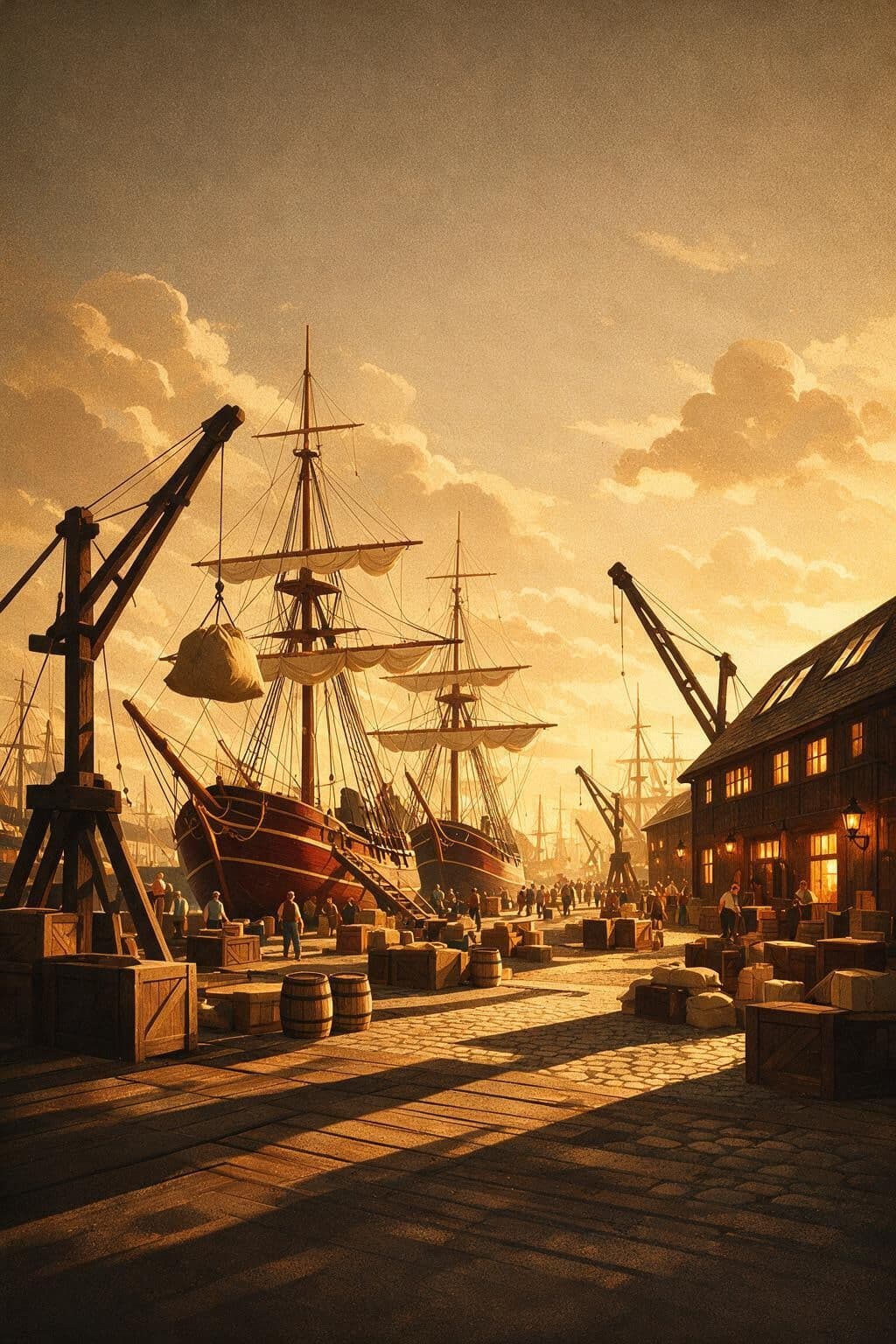
To make the point, Keynes paints a man. The inhabitant of London before the war could order, “sipping his morning tea in bed, the various products of the whole earth,” and reasonably expect them on his doorstep soon after.
By the same telephone he could put his savings into a mine or a railway on any continent. He could travel to almost any country without a passport, send his servant to the bank for gold coin, and go abroad carrying it, knowing nothing of the local language, religion or customs.
None of this required being a king. For a comfortable middle-class person, life offered conveniences beyond anything the most powerful monarchs of earlier ages had enjoyed. That was the real novelty: a whole world market within reach of an ordinary gentleman at breakfast.
It is easy to read that passage as a fond farewell to a golden age. Read the next sentence and the tone changes. The Londoner's real mistake was that he regarded all this as “normal, certain, and permanent, except in the direction of further improvement.”
Any interference struck him as scandalous and avoidable. Militarism, imperialism, racial and cultural rivalries, monopolies and trade restrictions were, for him, little more than entertainment in the daily paper. Keynes calls them the serpent in this paradise, and the serpent was already in the garden while the man read about it over breakfast.
So the portrait is not nostalgia. It is a warning about mistaking the unusual for the natural. A world that feels permanent to the people inside it is exactly the world they will not think to protect.
What is the main point of Keynes's portrait of the Londoner ordering the world's goods over his morning tea?
- That people took a rare, fragile arrangement for the permanent order of thingsCorrect answer
- That the telephone and the railway were the true causes of Europe's wealth
- That England's comfort had been built at the expense of continental Europe
- That pre-war Europe was a fair order the peace should simply restore
The sting is in the line that follows: the Londoner saw his world as normal, certain and permanent. The passage sounds nostalgic, but Keynes is warning that the comfort was real and the permanence was an illusion.
The first instability was a population that could only live by its machinery. Germany grew from about 40 million people in 1870 to about 68 million by 1914, and hardly any of them emigrated. The old, largely self-supporting farming Germany could never have fed them.
So Germany turned itself into a vast industrial machine. It imported food and raw materials, worked them up, and sold the products abroad to pay for the next shipment. The machine depended on markets, shipping, credit and coal far beyond its own borders.
Keynes's image is exact: the German economy was “like a top which to maintain its equilibrium must spin ever faster and faster.” A top is stable only in motion. Slow it down and it does not settle gently; it wobbles and falls. A population that lives by the machine has nowhere to go when the machine stops.
Now look at where that machine sat. Currencies tied firmly to gold, frontiers that barely got in the way and near-total security of property let trade and capital move freely across three empires holding almost three hundred million people.
Round Germany the rest of the continent arranged its economic life. Germany was the best customer of Russia, Italy, Holland, Belgium, Switzerland and Austria-Hungary, and the second best of Great Britain. Britain itself sold more to Germany than to any country except India. East of the Rhine, German capital and German organization built much of what existed.
This matters more than it first appears. Germany was not one country among many in the European system. It was the hub of the whole wheel, and a hub cannot be smashed without the spokes coming loose with it.
Inside the course
12 parts- Europe before the war: the fragile miracleFree above
- The conference, and the men in the room
- Wilson: the idealist out-played
- Clemenceau, and the Carthaginian peace
Questions
Is The Economic Consequences of the Peace free to read in Astra Trainer?
Yes. The full book opens free in the app’s reader, in English, German, French, Portuguese, and Russian.
What is the short course?
12 short parts that walk through the book’s key ideas in slides, each with a quick quiz. The first six slides are free to try on this page.
Where do I get the app?
Astra Trainer is free on the App Store and Google Play. The Economic Consequences of the Peace is waiting in the app’s library.