Pushing to the Front
Orison Swett Marden · 1894
5.0 · 5 ratings
About the book
Marden's monument to getting on: opportunity where you stand, promptness, manners, purpose — sixty-six chapters of examples from every profession, rewritten from memory after fire destroyed the first manuscript. The encyclopedia of the success gospel.
Try the short course
Part 1 · Opportunity has hair in front. The first six slides, free.


1 / 6

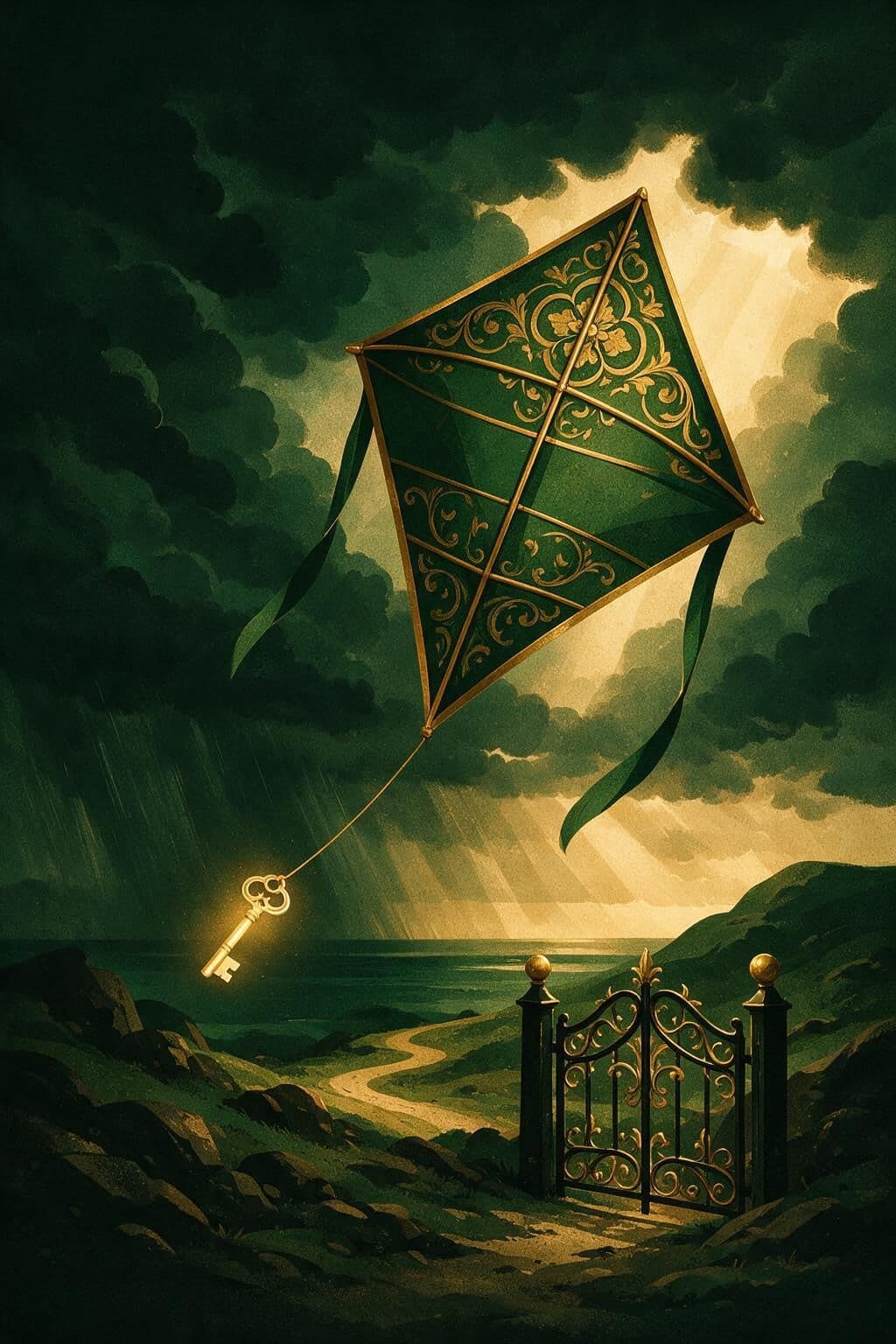
A visitor in a sculptor's studio stops in front of a strange figure. Its face is hidden behind its hair, and its feet have wings. The sculptor tells him its name is Opportunity.
Why hide the face? Because people seldom know him when he comes to them. Why the wings? Because he is soon gone, and once gone, nobody can catch up with him.
That little exchange, tucked into Marden's first chapter, holds the whole chapter in miniature. Opportunity has two ways of slipping past you: you fail to recognise it, or you recognise it too late. Almost every story Marden tells is one or the other, and the people he admires are simply the ones who beat both.
Read this preview as text
A visitor in a sculptor's studio stops in front of a strange figure. Its face is hidden behind its hair, and its feet have wings. The sculptor tells him its name is Opportunity.
Why hide the face? Because people seldom know him when he comes to them. Why the wings? Because he is soon gone, and once gone, nobody can catch up with him.
That little exchange, tucked into Marden's first chapter, holds the whole chapter in miniature. Opportunity has two ways of slipping past you: you fail to recognise it, or you recognise it too late. Almost every story Marden tells is one or the other, and the people he admires are simply the ones who beat both.
Marden adds a second image, from a Latin author: Opportunity has hair in front and is bald behind. Catch her by the forelock as she comes toward you and you can hold her. Let her pass, and there is nothing left to grab.
Notice what that picture demands. You cannot seize a forelock you only ever see from behind, so noticing has to come first. But noticing is not enough on its own. The hand has to be moving already.
A cardinal quoted in the same chapter names the cost. Fortune visits everyone once in a life, but if she finds you unready, she goes in at the door and out at the window. The visit is not the scarce thing. Being ready when she arrives is.
In the sculptor's statue, why is Opportunity's face hidden?
- Because people seldom recognise it when it arrivesCorrect answer
- Because it is too rare for most people to meet
- Because it shows itself only to a deserving few
- Because it disguises itself to test people's nerve
The sculptor's answer is that people seldom know Opportunity when it comes. The problem is recognition, not rarity: Marden insists every life is full of opportunities, which is exactly why missing them is on us.
A grand banquet in Venice, and just before the guests arrive the confectioner sends word that he has spoiled the ornament for the table. The head servant is at his wits' end. A pale boy from the kitchen offers to make something that will do, if they will let him try.
He calls for butter and models a large crouching lion. The guests, some of them serious judges of art, forget their dinner staring at it. The host pays for the boy's training under the best masters, and the scullion becomes Antonio Canova, one of the great sculptors of all time.
Look at what the lucky break actually was: a spoiled dessert and a lump of butter. The real asset was a boy who had worked hard to become a good stone-cutter in his grandfather's shop. The occasion was trivial; the hands were already trained.
Marden borrows a line that quietly overturns the usual idea of a big break: "What we call a turning-point is simply an occasion which sums up and brings to a result previous training."
A turning point, in other words, creates nothing. It adds up. The moment only reveals what years of ordinary effort have already put in place, and the same moment handed to someone untrained is just an evening, a storm, a ruined dessert.
The same writer goes on: accidental circumstances are nothing except to people trained to take advantage of them. That is why the chapter pictures the young surgeon whose chief is away when the critical operation comes. Is he equal to it? Whatever the answer is, it was settled long before, because you cannot prepare once the moment arrives.
According to the chapter, accidental circumstances mean nothing to a person who has not been trained to take advantage of them.
TrueCorrect answer
True, and the book says it that flatly: a turning point only sums up earlier training. The same lucky accident that makes one person does nothing at all for someone who is unprepared.
Inside the course
20 parts- The man and the opportunityFree above
- «Wanted — a man»
- Boys with no chance: the case studies
- Opportunities where you are
Questions
Is Pushing to the Front free to read in Astra Trainer?
Yes. The full book opens free in the app’s reader, in English and Russian.
What is the short course?
20 short parts that walk through the book’s key ideas in slides, each with a quick quiz. The first six slides are free to try on this page.
Where do I get the app?
Astra Trainer is free on the App Store and Google Play. Pushing to the Front is waiting in the app’s library.