
Scientific Advertising
Claude C. Hopkins · 1923
5.0 · 7 ratings
About the book
The book Ogilvy said nobody should touch advertising without reading seven times: advertising is salesmanship in print, measured by coupons and keyed ads rather than applause. Hopkins drew the laws from thousands of tested campaigns, and most of them still hold.
Try the short course
Part 1 · Where the rules actually come from. The first six slides, free.


1 / 6
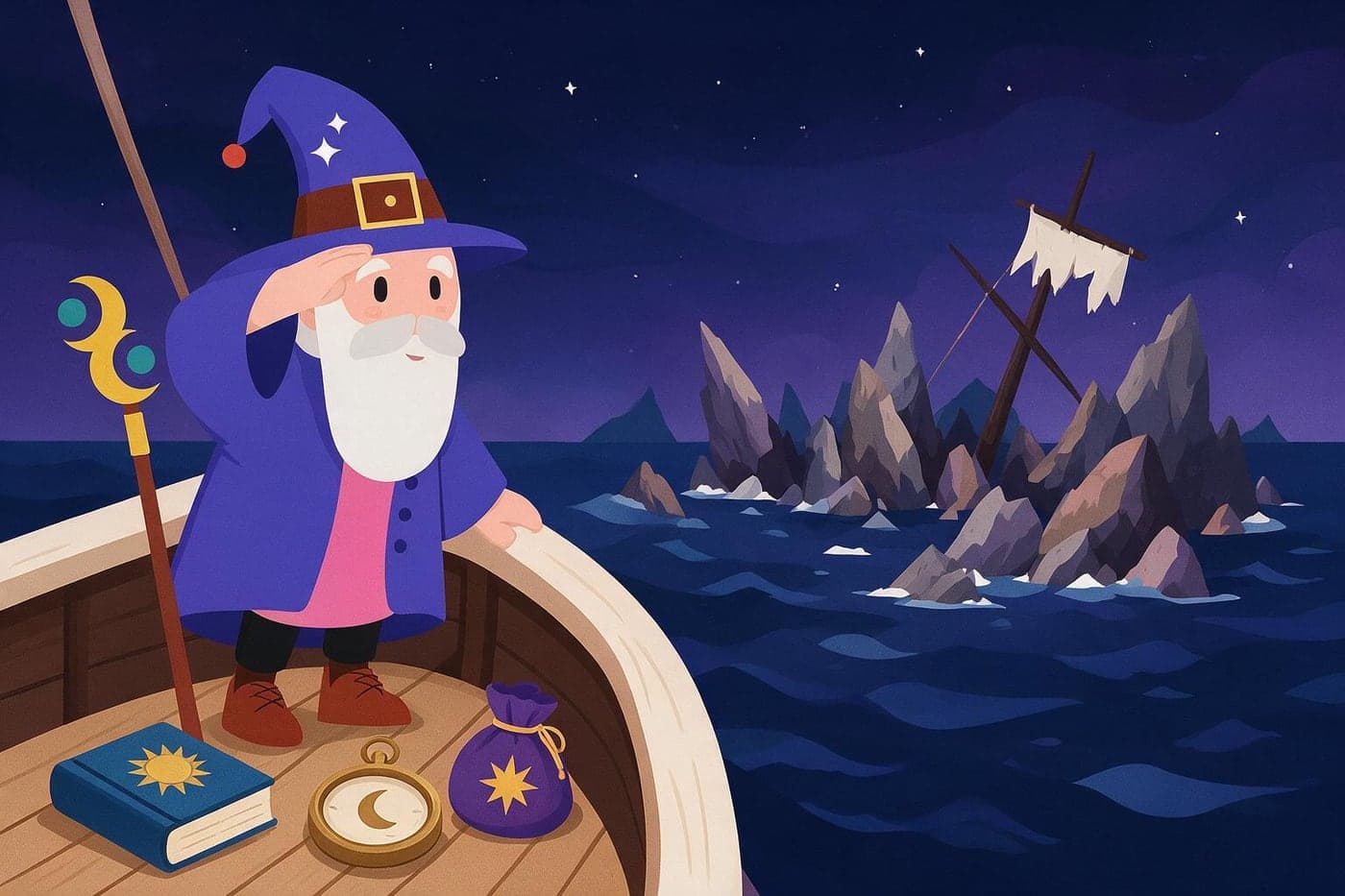
Picture advertising before this book the way Hopkins pictured it: a sea full of ships, each captain drawing his own map. Every man was "a law unto himself", steering by whim and hoping to reach port.
The trouble was not that these men were stupid. It was that nothing they learned outlived the voyage. "The wrecks were unrecorded, so countless ventures came to grief on the same rocks and shoals." One man's guess was as good as another's, because hardly anyone sailed the same course twice.
That is the disease the whole book sets out to cure. A failure nobody writes down is not a lesson. It is the same wreck, waiting for the next ship.
Read this preview as text
Picture advertising before this book the way Hopkins pictured it: a sea full of ships, each captain drawing his own map. Every man was "a law unto himself", steering by whim and hoping to reach port.
The trouble was not that these men were stupid. It was that nothing they learned outlived the voyage. "The wrecks were unrecorded, so countless ventures came to grief on the same rocks and shoals." One man's guess was as good as another's, because hardly anyone sailed the same course twice.
That is the disease the whole book sets out to cure. A failure nobody writes down is not a lesson. It is the same wreck, waiting for the next ship.
So what changed? Hopkins credits the large advertising agencies, and his reason is almost boring: they kept books.
An agency running hundreds of campaigns tested thousands of plans and ideas, and wrote down what happened. Copywriters came and went, but their results stayed behind and became part of the firm's equipment. Over decades the agency turned into a storehouse of recorded results, a place where nearly every selling question had already been answered by many experiences.
This is the first thing to take from the chapter. A science, for Hopkins, is not a genius with a theory. It is a memory that does not walk out of the building when a person does.
In Hopkins's picture of early advertising, why did so many ventures come to grief on the same rocks?
- Customers' tastes changed too fast for any plan to last
- The men running them lacked real talent and experience
- Nobody recorded the failures, so nobody learned from themCorrect answer
- Advertising space cost too much for small experiments
His complaint is about memory, not ability: each man mapped his own course and the wrecks went unrecorded. The agencies he praises did hire able men, but what made their work a science was the record that outlived each of them.
The tool that fills those files is the key. A keyed ad is one whose replies can be traced back to the exact ad that produced them, usually through a coupon marked so the advertiser knows where it came from.
With keys in place, opinion stops being the judge. You run one version against another, compare them, then compare again the other way round, "backward and forward", and record what happens. Headlines, sizes, settings, arguments and pictures all get the same treatment.
In a big agency this was done on hundreds of product lines, and sometimes on thousands of separate ads for a single line. Nobody had to be right in advance. They only had to count.
Here is the sentence the rest of the book stands on: "When one method invariably proves best, that method becomes a fixed principle."
Read the word invariably slowly. A law, in Hopkins's sense, is not what worked once, and not what the most senior person in the room happens to prefer. It is a method that kept beating its rivals, test after test, across ads and products and years. The laws are survivors, not opinions.
That changes how to read him. When he later lays down a rule with total confidence, he is not reporting his taste. He is reporting which side kept winning every time the coupons were counted.
The first laws came from mail order, and for a plain reason. There, results are traced to the fraction of a penny. The cost per reply and the cost per dollar of sale show up exactly, and an ad either pays or it doesn't.
When cutting the cost of results by even one percent means real money, nobody can afford to guess. Mail order became the first laboratory simply because it was the first place where guessing was visibly expensive.
But most goods are sold in shops, where no coupon ever comes back. For those, Hopkins compares one town with another: one method here, a different one there, both measured by the cost of sales. The ad cannot be traced, but the town can.
Inside the course
12 parts- How advertising laws are establishedFree above
- Just salesmanship — the whole definition
- Offer service, not brag
- Mail order advertising: the sternest teacher
Questions
Is Scientific Advertising free to read in Astra Trainer?
Yes. The full book opens free in the app’s reader, in English, German, French, Portuguese, and Russian.
What is the short course?
12 short parts that walk through the book’s key ideas in slides, each with a quick quiz. The first six slides are free to try on this page.
Where do I get the app?
Astra Trainer is free on the App Store and Google Play. Scientific Advertising is waiting in the app’s library.