Ten Thousand Dreams Interpreted
Gustavus Hindman Miller · 1901
4.8 · 4 ratings
About the book
A Chattanooga merchant's enormous alphabet of dreams — ten thousand entries from Abandonment to the Zoological Garden, each with its verdict for the dreamer. Every dream book since has copied it, usually without saying so.
Try the short course
Part 1 · A busy merchant who kept night watch. The first six slides, free.


1 / 6
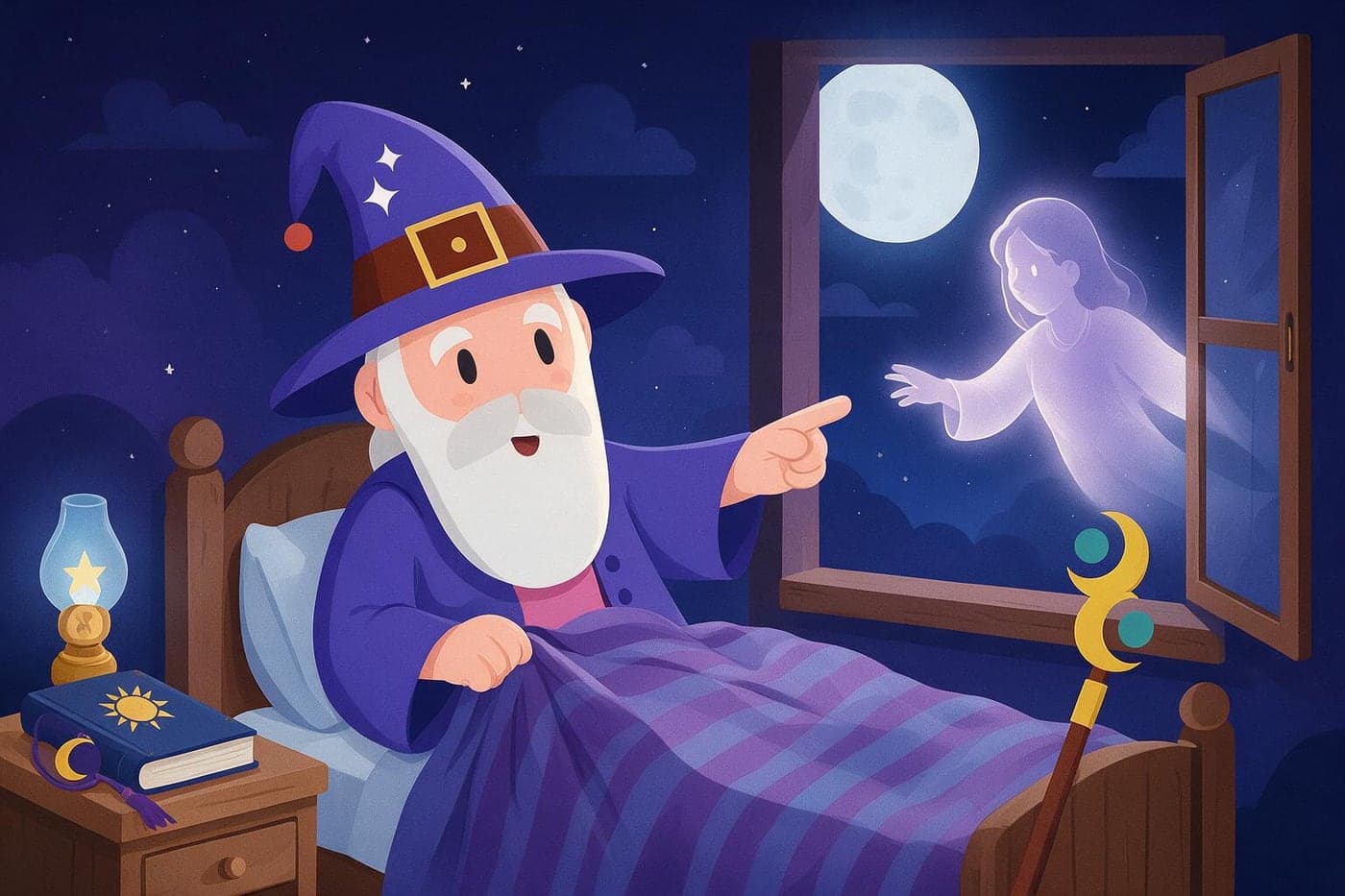
Cicero tells of two travellers from Arcadia who split up for the night, one lodging at an inn, the other at a private house. The second dreamed that his companion was begging him for help. He woke, decided the dream was not worth the trouble, and went back to sleep.
The friend came again in a second dream. It was too late now, he said: he had been murdered, and his body was hidden in a cart under manure. The cart was searched, and the body was in it.
Gustavus Hindman Miller puts this story in the preface of his dream dictionary, and it is the right place to begin. His book is not really about the man who was killed. It is about the one who rolled over and went back to sleep.
Read this preview as text
Cicero tells of two travellers from Arcadia who split up for the night, one lodging at an inn, the other at a private house. The second dreamed that his companion was begging him for help. He woke, decided the dream was not worth the trouble, and went back to sleep.
The friend came again in a second dream. It was too late now, he said: he had been murdered, and his body was hidden in a cart under manure. The cart was searched, and the body was in it.
Gustavus Hindman Miller puts this story in the preface of his dream dictionary, and it is the right place to begin. His book is not really about the man who was killed. It is about the one who rolled over and went back to sleep.
Before he gives you a single definition, Miller lines up his witnesses. Joseph reads the fat and lean cattle. Pilate's wife begs her husband to have nothing to do with the trial of Christ. Augustus, on the strength of a friend's dream, leaves his tent a few hours before the enemy captures it and runs swords through his empty bed.
Look at what the stories share. Nearly every one turns on a person who either listened or refused to. Of Julius Caesar, Miller says simply that if he had taken dreams less lightly, he would have heeded the warning his wife Calpurnia received in hers.
That is the angle of the whole book. Miller cares less about proving that dreams can see ahead than about what a dream is for once it has. For him, a dream is a warning with an address: it comes to someone who still has time to act.
For all his confidence, Miller keeps one cautious voice in his preface. Chrysippus, the Greek philosopher who wrote a whole volume on dreams, called skilled interpretation a true divination, then added that, like every art that works by conjecture and by rules, it is not infallible.
That admission matters more than it looks. Miller is not handing you a sacred code in which each image locks in a fate. What he offers is closer to a weather forecast: usually right, sometimes wrong, and far better than never looking at the sky at all.
Keep this in mind when you open the dictionary. It asks to be read as a craft, not a code, which is why so many of its entries turn on an “if” or an “unless.”
Why does Miller retell stories like Calpurnia's warning to Caesar before his dictionary begins?
- To prove that famous people's dreams are more reliable than ordinary ones
- To show that the future is fixed and that no warning can change it
- To trace the history of printed dream books back to ancient Rome
- To show that dreams are warnings that help only the people who act on themCorrect answer
Almost every story in his parade turns on someone who listened or refused to, and he says Caesar would have listened to Calpurnia had he been less incredulous. The famous names lend weight, but Miller soon turns to ordinary citizens, so fame is not his point.
Having cited Plato and Plutarch, Miller does something more like a local merchant than a classicist: he turns to his neighbours. The preface prints dreams signed only with letters, A to G, two of them from well-known residents of Chattanooga, Tennessee. He adds that the dreamers are alive, that their names and addresses can be obtained, and that none of them is a fanatic inclined to believe in spirits.
One of them, F, was boarding in New York while his wife and baby stayed in the country. He dreamed that a tall figure in a white gown followed him upstairs, circled his room, and said at the door, “I have taken all you have.” At half past nine the next morning a telegram told him the baby had died.
This is evidence the way a businessman gathers it: dates, vouched-for witnesses, people you could go and ask.
The testimony Miller seems proudest of is about money. D, a successful businessman who, Miller stresses, never speculated, had been advised to buy corn. At noon he lay down on a lounge to wait for lunch, and had barely closed his eyes when a voice whispered, “Don't buy, but sell that corn.”
The voice even named the price at which to buy it back. Miller says he watched the corn market himself and saw it take the turns the dream described.
His reasoning is the revealing part. The dreamer had no such thoughts and no such information, so the message could not have been his anxious waking mind talking to itself. For Miller that settles it: this was knowledge the waking mind did not have, and it arrived the moment the mind stopped calculating.
Inside the course
20 parts- Why a practical merchant took dreams seriouslyFree above
- How to develop the power to dream
- Exaggerated dreams, and how to shrink them to size
- Contrary dreams: when the omen means its opposite
Questions
Is Ten Thousand Dreams Interpreted free to read in Astra Trainer?
Yes. The full book opens free in the app’s reader, in English, Spanish, German, French, Italian, Polish, Portuguese, and Russian.
What is the short course?
20 short parts that walk through the book’s key ideas in slides, each with a quick quiz. The first six slides are free to try on this page.
Where do I get the app?
Astra Trainer is free on the App Store and Google Play. Ten Thousand Dreams Interpreted is waiting in the app’s library.