


You've been doing more for a while now. Bigger projects, more responsibility, decisions that used to go through someone above you. And underneath the satisfaction of that growth sits a quieter question: is it time to actually ask for the title and role to catch up, or would bringing it up now make you look presumptuous, like you're rushing something that should happen on its own?
This is a different question from asking for more money in your current role, which how to negotiate a raise covers directly. A promotion is a bigger ask — a new title, a new scope, sometimes a different reporting line — and it's rarely a single conversation. Negotiation Skills 101 covers the fundamentals that still apply here, but a promotion runs on a longer timeline than most negotiations, and that changes the strategy.
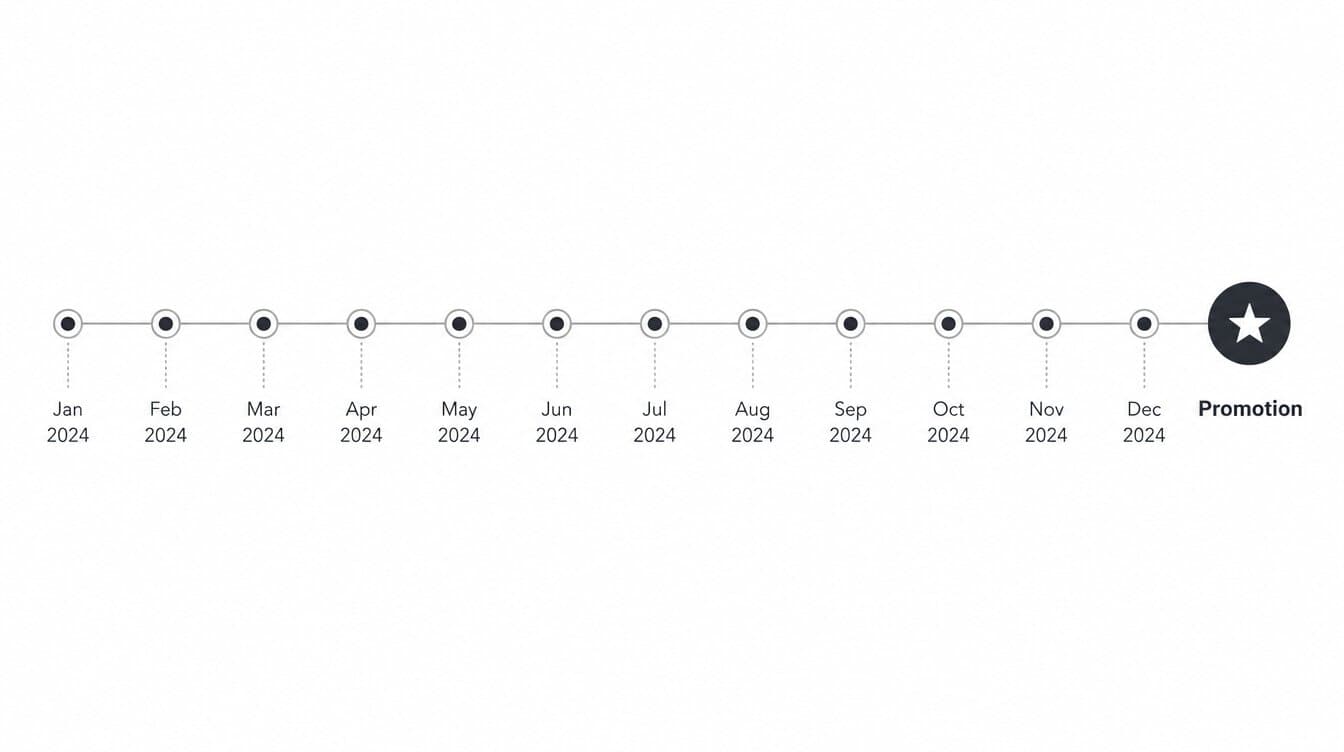
When is the right time to bring up a promotion?
The right time is once you can point to a clear, sustained gap between your current title and what you're actually doing — not the moment you first start hoping for one. Bringing it up too early, before the evidence exists, tends to read as impatience rather than readiness.
A few signals that the timing is right: you've been operating at the next level for a meaningful stretch, not just for a single standout project. Other people already treat you as though you hold more seniority than your title reflects. And there's a natural checkpoint coming up — a performance review, a planning cycle, a reorg — where compensation and scope are already going to be discussed anyway.
Avoid raising it during a hiring freeze, immediately after a layoff round, or in the same conversation as a recent mistake you're still working to move past.
Check yourselfYou are fairly sure you are ready, but "fairly sure" is a feeling. Before you read on: what test would settle it instead — something that ends in evidence a skeptical colleague could check?Show the answerHide the answer
Write out the responsibilities of the role one level up, as a list, and go through them one at a time: already routine, occasional, or not yet. Then ask of each routine item whether you do it as your normal baseline or only when something goes wrong — promotions follow the first far more reliably than the second. What the exercise leaves you with is a set of specifics you could hand that skeptical colleague, which is what readiness looks like from the outside.
How do you know you're actually ready, not just eager?
Readiness shows up as evidence other people can already see, not just a feeling you have about your own growth. If you had to convince a skeptical colleague, using only concrete examples, that you're already operating at the next level, could you do it?
A useful test: list the specific responsibilities of the role one level up from yours, and go through them one by one, honestly. Which of these are you already doing consistently? Which are you doing occasionally but not consistently? If most of the list is already true of your day-to-day work, that's a strong case.
Wanting the promotion and being ready for it are two different things, and conflating them is the most common way this conversation goes wrong.
It's worth being honest, too, about the difference between doing next-level work occasionally under pressure and doing it as your normal, sustained baseline. Promotions tend to follow the second kind of evidence far more reliably than the first.
How do you build the case before the conversation even happens?
Build it over months, through visibility and documentation, not through a single persuasive pitch on the day you finally bring it up. By the time you have the conversation, your manager should already have a reasonably accurate sense of your growth — the conversation should confirm what they already suspect, not introduce it from scratch.
Keep a running, specific record of what you've taken on: projects led, decisions made independently, situations where you operated beyond your formal scope. Share wins as they happen rather than saving them all for one big reveal. And where it's natural, ask for feedback along the way: "Is this the kind of work you'd expect at the next level?"
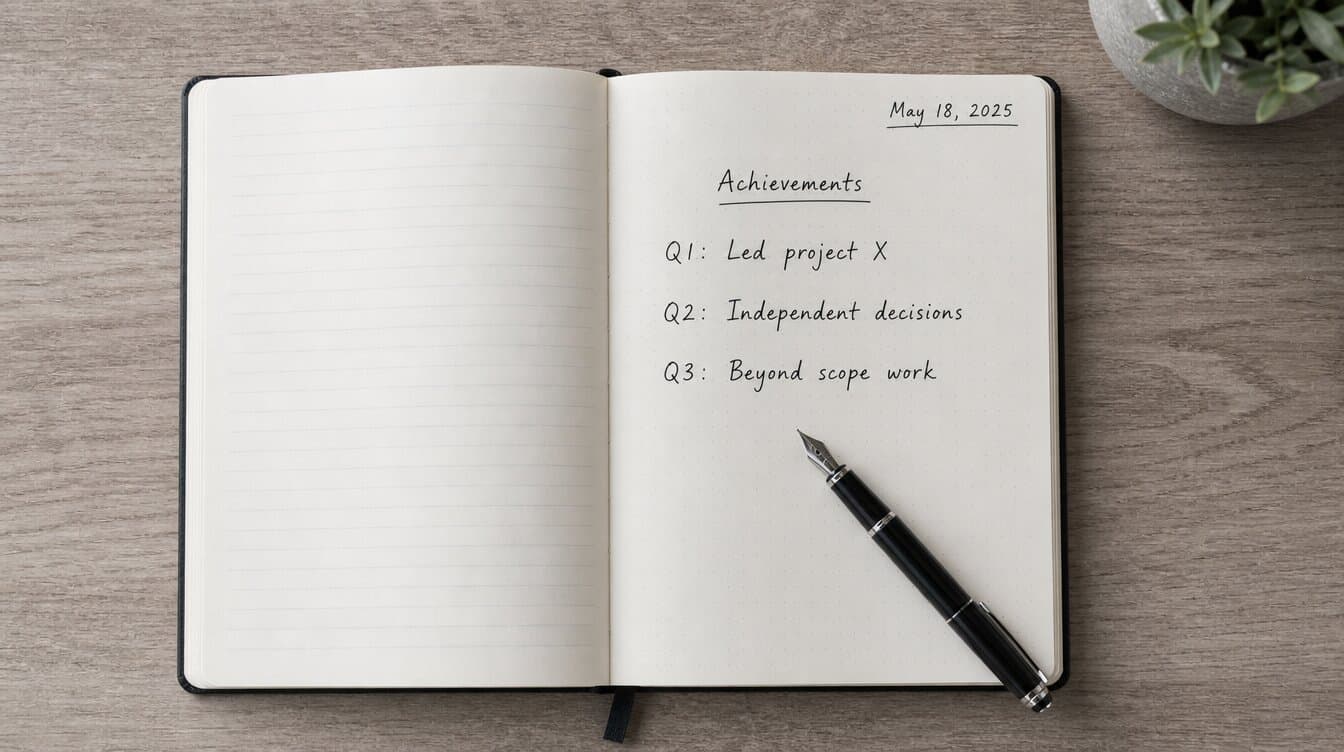
Check this before you book the conversation
Ticked: 0 of 5
The lines you cannot tick are the months of work between now and the ask, not reasons to drop it.
What do you actually say to start the conversation?
Open by asking for a conversation about your growth and trajectory, not by leading with a demand for a specific new title. Framing it as a discussion invites your manager into the process rather than putting them on the spot for an immediate yes or no.
"I'd like to talk about my growth here and what the path to [next level] could look like. Could we set aside some time to discuss it?"
When the actual conversation happens, lead with specifics: what you've taken on, how it maps to the next level's responsibilities, and what you're hoping the path forward looks like. Ending with a genuine question — "what would you need to see from me to make this happen?" — turns the conversation into a shared plan rather than a verdict delivered on the spot.
What if they say you're not ready yet?
Ask for specifics, not just a soft no. "Not yet" without any detail attached tends to repeat itself indefinitely; "not yet, and here's specifically what I'd need to see" gives you an actual target and a way to track progress toward it.
"That's helpful to know — could we set a checkpoint in a few months to revisit this, so I have a clear sense of what progress looks like?"
If the answer stays vague across multiple attempts, or the goalposts seem to move each time you meet the previous bar, that's worth taking seriously as information about your actual ceiling in this specific role.
What to do next
A promotion conversation is rarely won in the room. It's won in the months before it, through visible, consistent evidence that makes the eventual ask feel like a formality rather than a surprise. Time it around real readiness rather than eagerness, build the case incrementally, and treat a no as a specific checkpoint to work toward rather than a closed door.
Test yourself
Question 1 of 3
You led one standout project last quarter, and the company announced a hiring freeze last month. What does the article say about raising the promotion now?
When is the right time to bring up a promotion?
Once you can point to a sustained gap between your current title and what you're actually doing, not the moment you first start hoping for one. Look for a natural checkpoint like a review or planning cycle, and avoid raising it during a hiring freeze or right after a mistake.
How do you know you're actually ready for a promotion, not just eager?
Readiness is evidence other people can already see. Check whether the specific responsibilities of the next level are already your consistent baseline, not just something you rise to occasionally under pressure.
How do you build the case for a promotion before the conversation happens?
Build it over months through visibility and documentation — keep a running record of what you've taken on, share wins as they happen, and ask for feedback along the way so your manager already suspects the growth before you formally ask.
What if your manager says you're not ready yet for a promotion?
Ask for specifics rather than accepting a soft no. Request a concrete checkpoint to revisit the conversation. If the goalposts keep moving vaguely across multiple attempts, treat that as real information about your ceiling in the role.