


"Just be more confident" is the advice you've probably heard more than any other, and it's probably never once made the conversation easier. That's because the hesitation isn't really a confidence problem — it's often a rational read of a real social dynamic, and advice built around fixing your personality skips past the actual thing worth understanding.
This article isn't about whether to negotiate — the answer to that is always yes, for anyone, in any circumstance. It's about a specific, well-documented pattern that shapes how that negotiation tends to go, and what to do with that information practically rather than just feeling discouraged by it.
Negotiation Skills 101 covers the fundamentals that apply to everyone — BATNA, interests versus positions — but this specific pattern deserves its own honest look, backed by real research rather than another pep talk.

Is the confidence gap in salary negotiation actually about confidence?
Not really, and this is worth stating plainly. Research going back to Linda Babcock and Sara Laschever's Women Don't Ask, from Carnegie Mellon, found that women are statistically less likely than men to initiate salary negotiations in the first place. The natural assumption is that this comes down to a personal trait — less confidence, less assertiveness. The research points somewhere more specific and more useful: a documented pattern of social cost that makes hesitation a reasonable response, not a personal shortfall.
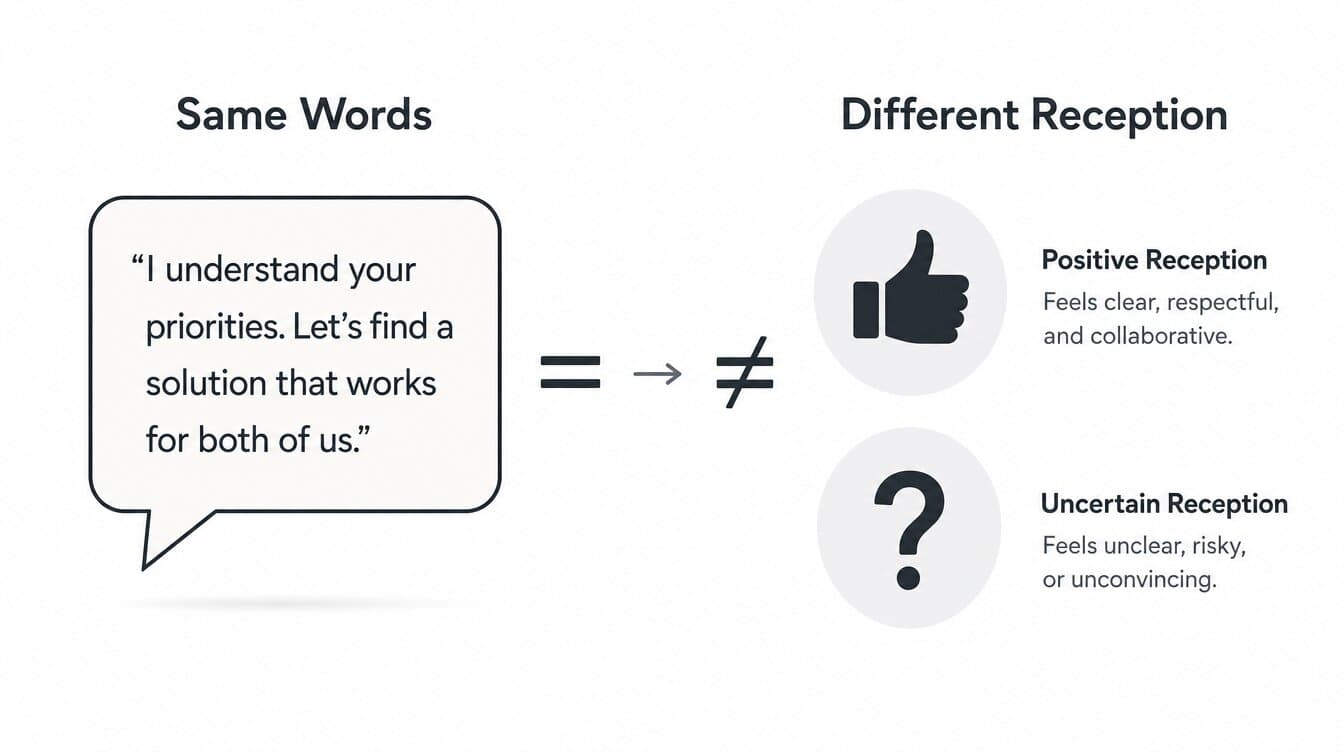
Work by Hannah Riley Bowles at Harvard's Kennedy School examined what happens when men and women negotiate the same way, using identical scripts and identical requests. The finding, often called the "backlash effect," was that women who negotiated assertively were sometimes evaluated less favorably by observers than men making the exact same ask in the exact same words. That's not a confidence problem on the negotiator's side. It's a bias on the evaluator's side that the negotiator has to navigate, whether or not it's fair.
Calling this a "confidence gap" quietly shifts the responsibility onto the person negotiating. The research says the dynamic sits at least as much with the room they're negotiating in.
Why doesn't the advice to just be more confident actually work?
Because it treats a structural, external pattern as if it were an internal, personal one — and telling someone to feel differently about a real risk doesn't make the risk disappear. If assertive negotiation genuinely carries a different social cost depending on who's doing it, "be more confident" is asking someone to ignore real information rather than respond to it intelligently.
It also tends to backfire in a specific way: it adds a layer of self-blame on top of an already uncomfortable situation. Someone who hesitates isn't failing at confidence — they're often accurately sensing a dynamic the advice doesn't acknowledge exists.
Check yourselfThe backlash effect is one of the better replicated findings in this field. Before you read on: does that mean you should expect it in the next compensation conversation you have?Show the answerHide the answer
No — the research describes a pattern, not a universal rule. It varies by workplace, by industry and by individual manager, and it does not happen in every negotiation or to every woman. Replication is what makes it worth knowing about in advance; it is not a forecast of the room you are about to walk into. Which is why the article treats it as something to plan around rather than something to brace for.
Do women really face more pushback for negotiating the same way men do?
The research suggests a pattern, not a universal rule — this varies by workplace, by industry, by individual manager, and it doesn't happen in every negotiation or to every woman. But the backlash effect is one of the more consistently replicated findings in negotiation research, and it's worth taking seriously as a real factor to plan around rather than dismissing as anecdotal.
This doesn't mean the answer is to not negotiate. Not negotiating at all is, by a wide margin, the single most expensive mistake in salary conversations — for anyone, in any circumstance. It means the how matters more here than the advice usually accounts for.
What negotiation approach accounts for this instead of ignoring it?
Bowles's research points to a specific, practical fix: framing the request in relational terms rather than purely self-interested ones tends to reduce the social penalty without reducing how effective the ask is. This isn't about being less direct — it's about connecting the ask to something beyond pure self-interest.
"I want to make sure my compensation reflects the scope I'm now handling — I know that's something you'd want reflected accurately too, both for fairness and for how the team's roles are benchmarked."
The ask is exactly as direct and exactly as specific as it would be without that frame. What changes is the context it's delivered inside. This is not a universal fix, and it shouldn't need to exist at all — that's worth saying honestly. But it's a real, evidence-based tool for the environment as it currently is.
For the fuller mechanics of building and delivering a complete ask, a full salary negotiation script covers the broader structure this technique fits into.
It's worth naming a related trap directly: over-apologizing for the ask itself. Softening a reasonable request until it barely registers as a request undercuts it entirely — clarity and warmth aren't opposites.
How do you use this without pretending the problem isn't real?
Use the research as a practical tool, not as a reason to stay quiet. Understanding that a documented bias exists doesn't mean accepting a smaller outcome because of it — it means choosing an approach that navigates the bias deliberately, the same way any skilled negotiator adjusts their approach to the specific room they're in.
It also helps to remember that this pattern describes an average tendency across many studies and many rooms, not a guaranteed outcome in every single conversation. Knowing the pattern exists is preparation, not a prediction of exactly what will happen in your specific conversation.
What to do next
The gap here was never really about confidence, and framing it that way puts the burden in the wrong place. It's about a documented social dynamic that shapes how the same request can be received differently — and the fix isn't to feel braver, it's to negotiate with that reality in mind, directly, clearly, and without apologizing for asking.
Test yourself
Question 1 of 3
Someone argues that if two people ask for the same raise and get different reactions, the difference must be in how each of them came across. What does the Bowles research let you say about that?
Is the confidence gap in salary negotiation actually about confidence?
Not really. Research shows women are statistically less likely to initiate negotiations, but the reason points to a documented pattern of social cost — the 'backlash effect' — not a personal shortfall in confidence or assertiveness.
Why doesn't the advice to 'just be more confident' work?
Because it treats a structural, external pattern as a personal one. It adds self-blame on top of an already uncomfortable situation, when the hesitation is often an accurate read of a real social dynamic, not a personal failing.
Do women really face more pushback for negotiating the same way men do?
Research shows a consistently replicated pattern, though it varies by workplace and manager. It's not a universal rule, but it's a real factor worth planning around — which doesn't mean the answer is to not negotiate.
What negotiation approach accounts for the backlash effect?
Framing the request in relational terms — connecting the ask to a broader 'we' rather than pure self-interest — reduces the social penalty without reducing how direct or specific the ask is.