The Book of Ceremonial Magic
A. E. Waite · 1911
5.0 · 5 ratings
About the book
Waite's grand tour of every grimoire he could find — the Keys of Solomon, the Grand Grimoire, Honorius — retold with visible disapproval and complete thoroughness. He calls the literature absurd and then documents every rite in it, which is exactly what makes the book useful.
Try the short course
Part 1 · How old are the spellbooks, really?. The first six slides, free.


1 / 6
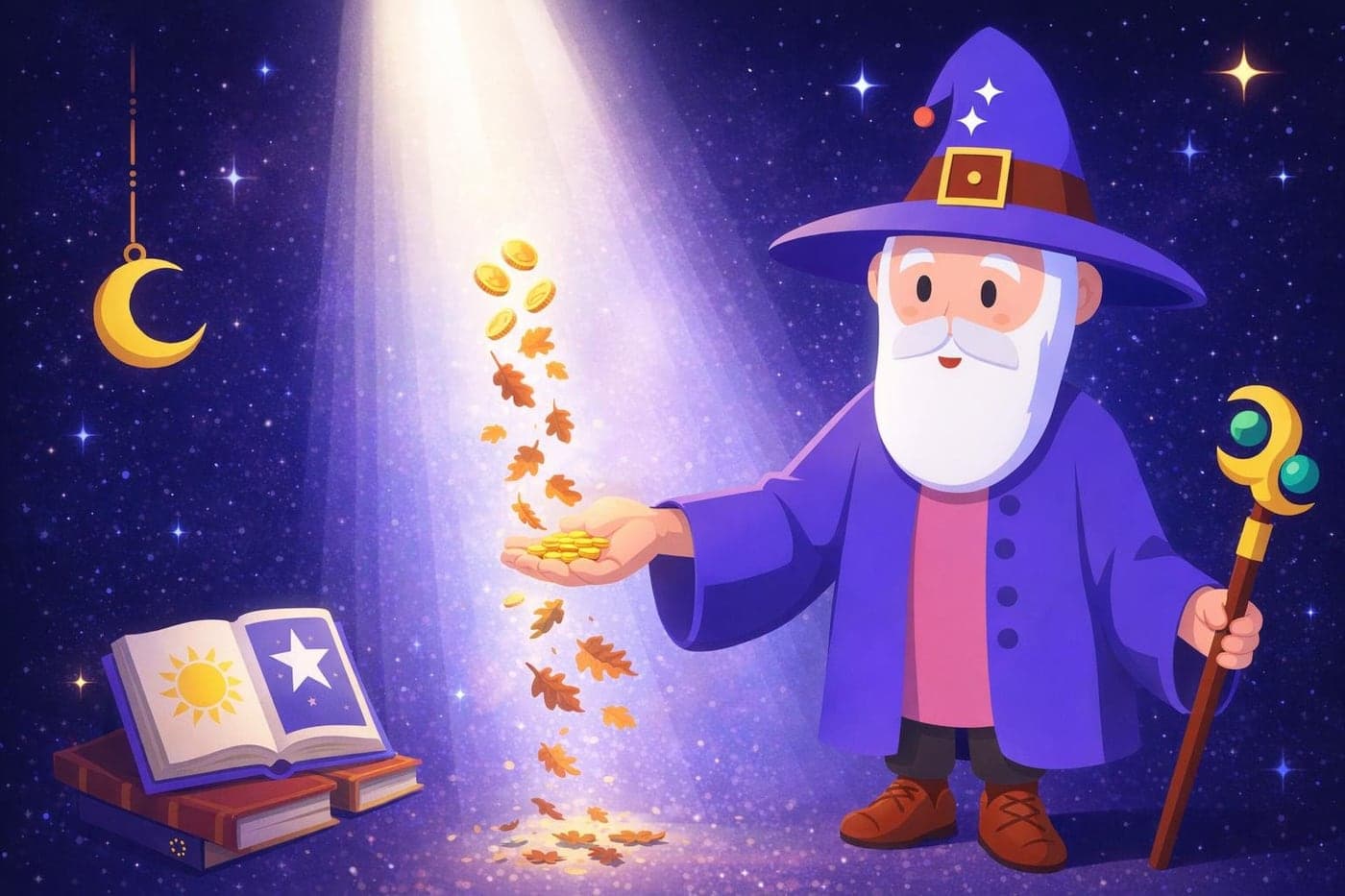
Waite opens his history with a dazzling tour of the country magic promises. There, two straight lines enclose a space, the circle is squared, earth becomes gold, words and wishes have creative power, and the dead are within easy reach.
Then he shuts the gate. The whole domain is like the gold of Faerie: it “cannot withstand daylight, the test of the human eye, or the scale of reason.” Its marvel-working words turn out to be mangled scraps of dead languages, powerless the moment anyone understands them.
So he will not argue about whether a magician can square the circle. What interests him is harder and more useful: why a large literature of spells exists at all, where it came from, and how old it really is.
Read this preview as text
Waite opens his history with a dazzling tour of the country magic promises. There, two straight lines enclose a space, the circle is squared, earth becomes gold, words and wishes have creative power, and the dead are within easy reach.
Then he shuts the gate. The whole domain is like the gold of Faerie: it “cannot withstand daylight, the test of the human eye, or the scale of reason.” Its marvel-working words turn out to be mangled scraps of dead languages, powerless the moment anyone understands them.
So he will not argue about whether a magician can square the circle. What interests him is harder and more useful: why a large literature of spells exists at all, where it came from, and how old it really is.
Magic in the old sense was a whole family of arts: astrology, alchemy, divination, occult medicine. Waite asks which of them actually made history, and his answer is blunt. None of them on their own.
Astrology demanded learning that only a few possessed. Alchemy would have stayed what it still is, a hopeful pursuit at the far edge of chemistry. Above them all sat the art of dealing with spirits. If you could summon a spirit whose office was to teach astrology, you skipped the years of calculation. If a spirit could fetch treasure from the bottom of the sea, why bother with the furnace?
That is why Waite calls ceremonial magic “the superior method, the royal road.” It promised at once what the other arts reached slowly, if ever.
One more feature made the art of spirits dangerous, and Waite thinks it matters most. It “was a conventional art, working by definite formulae; above all, it was a process in words.”
Think about what that means for someone with no Latin, no astrolabe and no laboratory. The ritual does not ask for talent or years of study. It asks you to say the right names in the right order, at the right hour, inside the right figure. Anyone who got hold of the formula could, in principle, work it.
Waite sees this as the fascination that drew men and women of all sorts to the Sabbath, blind to the stake at the end of the road. A process in words looks like a door that is open to everybody.
Why, in Waite's account, did ceremonial magic shape history when astrology and alchemy mostly did not?
- The Church judged astrology and alchemy the greater threat
- It promised dealings with spirits through formulas anyone could useCorrect answer
- It was older than both, with deeper roots in every culture
- It demanded long training, so only the powerful could practise it
The art of spirits was a shortcut: a fixed process in words that seemed to put every other occult power within anyone's reach. Long training was astrology's barrier, not magic's, and the Church barely troubled the astrologers.
Look at who went to the fire. Astrology, Waite notes, was scarcely discouraged, and if an alchemist was tortured now and then, it was to extract his secret. But dealing with spirits “made even the peasant tremble,” and when the peasant shakes at his hearth, the king is not safe in his palace.
The twist is that Church and State took the rituals completely seriously. It was their full acceptance that the process worked which kindled the faggots in every Christian land.
Waite adds a sharper reason. The Church offered contact with the unseen world through its sacraments. A magician claiming to reach that world directly, with his own formulas, stood in competition with the essential claim of the Church. Oddly, Waite thinks the Church need not have worried: nothing behind those rituals could touch the sacraments.
In Waite's view, it was the authorities' belief that the rituals really worked that sent magicians to the stake.
TrueCorrect answer
True. Waite says it was the full acceptance of the process as effectual by Church and State that lit the fires. Arts judged harmless, like astrology, drew almost no punishment.
Inside the course
17 parts- The antiquity of magical rituals, tested against the evidenceFree above
- White and black: the distinction Waite draws, and where it breaks
- The rituals of transcendental magic: Arbatel and the Enchiridion
- The composite rituals — the Keys of Solomon and Abramelin
Questions
Is The Book of Ceremonial Magic free to read in Astra Trainer?
Yes. The full book opens free in the app’s reader, in English, Spanish, German, French, Italian, Polish, Portuguese, and Russian.
What is the short course?
17 short parts that walk through the book’s key ideas in slides, each with a quick quiz. The first six slides are free to try on this page.
Where do I get the app?
Astra Trainer is free on the App Store and Google Play. The Book of Ceremonial Magic is waiting in the app’s library.