Thrice-Greatest Hermes
trans. G. R. S. Mead · 1906
5.0 · 7 ratings
About the book
Mead's three-volume gathering of the Greek and Latin Hermetic writings — the Poemandres, the Asclepius, the scattered fragments — with the arguments about who wrote them left in. This is the Hermes literature the Kybalion only alludes to.
Try the short course
Part 1 · Who Hermes Thrice-Greatest was meant to be. The first six slides, free.


1 / 6

Open any sermon in this collection and the cast is small and steady. Hermes teaches. His pupils are Tat and Asclepius, and now and then a king called Ammon listens in. It is very easy to picture one ancient Egyptian sage, white-haired, writing it all down.
Mead asks you to drop that picture on the first page of his commentary. The founder of the tradition, he says, was not a historical personage but “the personification of a teaching-power or grade of spiritual illumination.”
So the name on these books works less like an author's signature and more like the name of a rank. That is the strange, useful thing to hold before anything else: Hermes is who is speaking whenever the teaching itself is speaking.
Read this preview as text
Open any sermon in this collection and the cast is small and steady. Hermes teaches. His pupils are Tat and Asclepius, and now and then a king called Ammon listens in. It is very easy to picture one ancient Egyptian sage, white-haired, writing it all down.
Mead asks you to drop that picture on the first page of his commentary. The founder of the tradition, he says, was not a historical personage but “the personification of a teaching-power or grade of spiritual illumination.”
So the name on these books works less like an author's signature and more like the name of a rank. That is the strange, useful thing to hold before anything else: Hermes is who is speaking whenever the teaching itself is speaking.
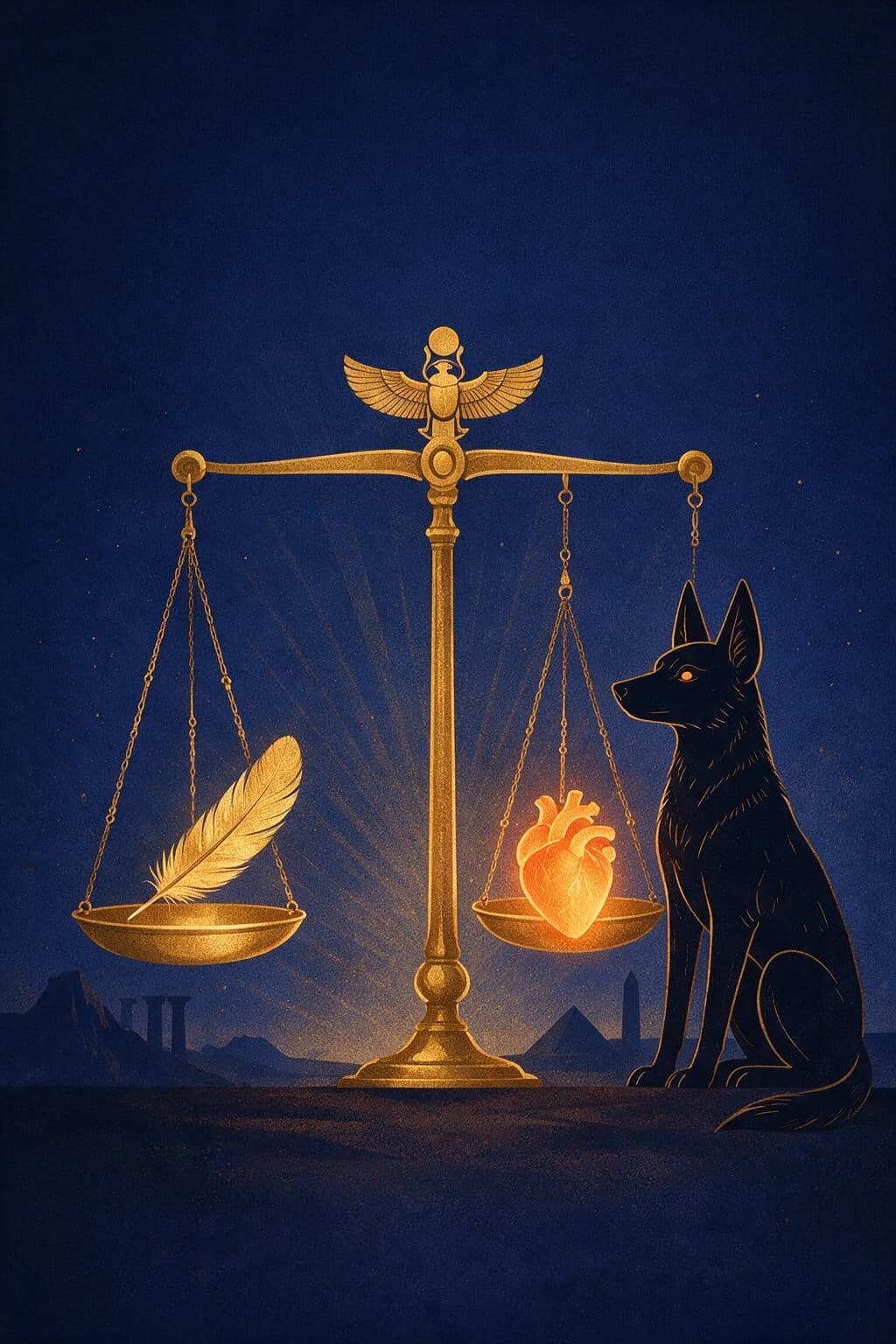
Behind the Greek name stands an Egyptian god. Thoth was the scribe of the gods, lord of writing, reckoning and sacred speech, the one who kept the record when the dead were weighed. His bird was the ibis, and his great city was the one the Greeks called Hermopolis.
When Greeks settled in Egypt they did what they always did with foreign gods: they looked for their own nearest match. Their Hermes was the messenger, the god of speech and quick wits, the guide of souls between worlds. The fit was close enough to stick.
An old Phoenician history that Mead quotes tells the whole story in one breath: the Egyptians called him Thoyth, the Alexandrians Thoth, and the Greeks turned him into Hermes. One god under three spellings — and every sermon here carries that double ancestry.
Why did Greeks living in Egypt find Thoth a natural match for their own Hermes?
- Both were guardians of the dead who judged every soul
- Both were the supreme creator who first shaped the cosmos
- Both were gods of words and writing who moved between worldsCorrect answer
- Both were ancient kings of Egypt later raised to godhood
Thoth was the scribe and lord of sacred speech, Hermes the messenger and god of speech; words and go-betweens are where they overlap. Thoth recorded the weighing of the dead rather than judging it, and neither was the supreme creator.
Then the title. Trismegistos means thrice-greatest, and it seems to echo the Egyptian habit of praising Thoth by saying “great” again and again — a superlative stacked until it can hold no more.
Mead pushes the title further than a compliment. The Poemandres, he writes, records a revelation received by one who had reached “the ‘Hermes,’ or rather ‘Thrice-greatest,’ state of consciousness.” Here the name stops describing a god and starts describing a stage of enlightenment.
What marks that stage, in his account, is not cleverness. It is a sharpened spiritual intuition that could catch the first touch of cosmic consciousness and still remember it after returning to ordinary waking life. Thrice-greatest is the one who comes back from the vision with the vision intact.
In Mead's reading, “Thrice-greatest” names a state of consciousness a mystic could reach, not only a god.
TrueCorrect answer
Mead describes the founder of the Poemandres teaching as one who had reached the “Hermes,” or “Thrice-greatest,” state — a grade of illumination. The title belongs to Thoth, but in these texts it also marks a condition a person could arrive at.
Why would a school of mystics want this particular god as its patron? Because Thoth was not only the god who wrote things down. He was the god through whom things are spoken into order.
A prayer Mead quotes addresses Thoth as the Logos, the Word: the one who alone brings order to gods and men, who makes things be out of what is not. An Egyptian wisdom papyrus he cites is even more intimate: “Thoth is heart and tongue of the Pious; lo! his house is God!”
That line is the whole programme in miniature. Thoth is the heart and the tongue — what you understand and what you say, held as one thing. A teaching signed “Hermes” claims to come from exactly that place: speech that is the same as knowing.
Inside the course
18 parts- Who «Thrice-Greatest Hermes» was supposed to beFree above
- Mead's problem: Egyptian wisdom, or Greek philosophy?
- The Poemandres, and the vision that opens the corpus
- Mind, Word, and the making of the world
Questions
Is Thrice-Greatest Hermes free to read in Astra Trainer?
Yes. The full book opens free in the app’s reader, in English, Spanish, German, French, Italian, Polish, Portuguese, and Russian.
What is the short course?
18 short parts that walk through the book’s key ideas in slides, each with a quick quiz. The first six slides are free to try on this page.
Where do I get the app?
Astra Trainer is free on the App Store and Google Play. Thrice-Greatest Hermes is waiting in the app’s library.