The Book of Dreams and Ghosts
Andrew Lang · 1897
4.9 · 7 ratings
About the book
Scotland's great folklorist collects the best-attested dreams, wraiths and hauntings he can find and tells them like the storyteller he is — sceptical in the preface, spellbound by page ten. The Beresford ghost, Ticonderoga, and the case files of Victorian wonder.
Try the short course
Part 1 · Evidence first, shivers second. The first six slides, free.


1 / 6
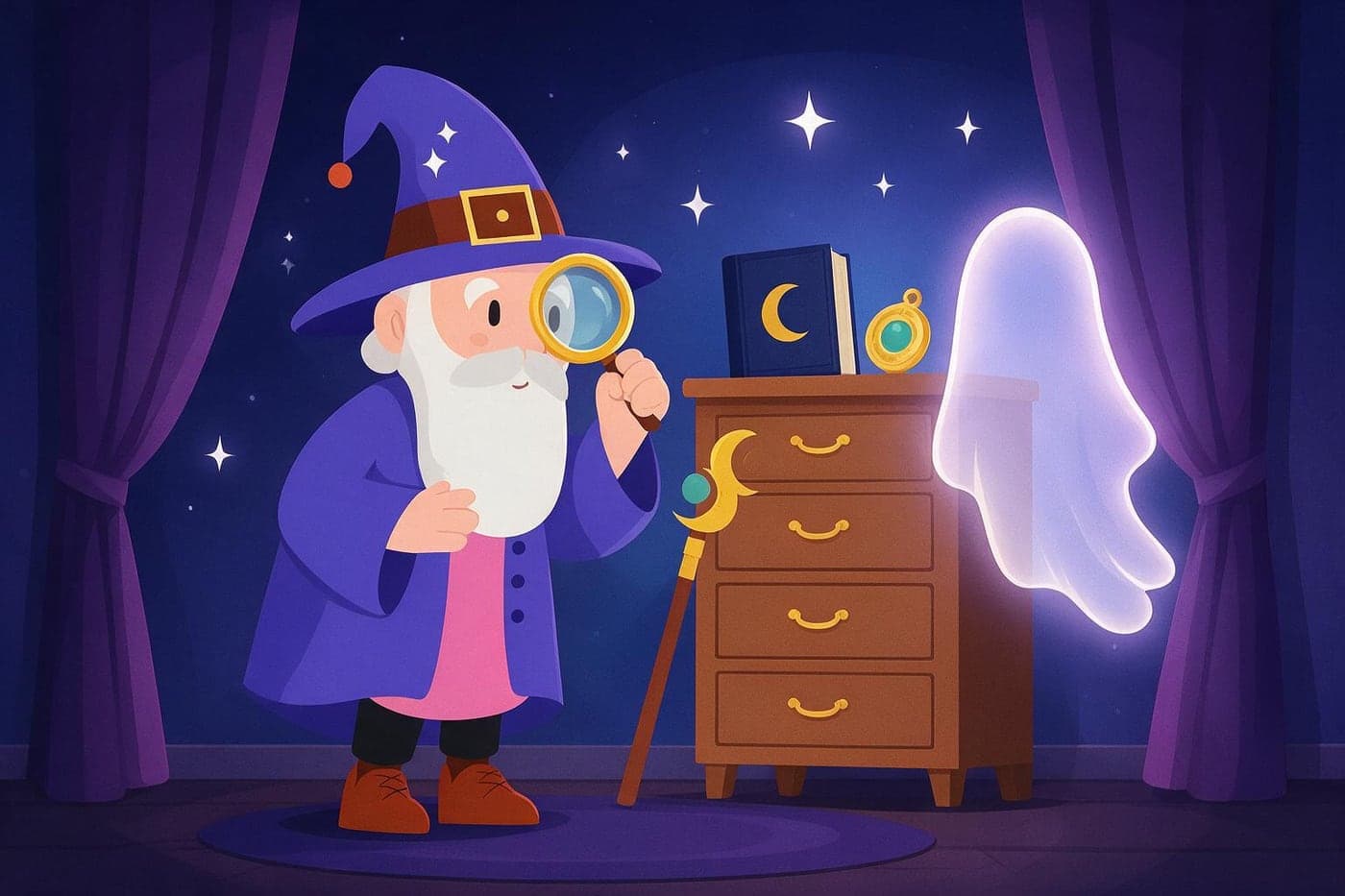
Andrew Lang starts from a claim that sounds like a verdict against ghosts, and is not. In the modern view he sets out in his preface, every ghost is a hallucination: a perception of something which is not present.
He leans on William James to take the sting out of the word. A hallucination is a real sensation, "as good and true a sensation as if there were a real object there. The object happens not to be there, that is all."
So when someone sees her grandfather standing by the dresser, the seeing is genuine. What is missing is a grandfather in flesh, blood and clothes. On that much, Lang says, you offend neither science, religion nor common sense.
Read this preview as text
Andrew Lang starts from a claim that sounds like a verdict against ghosts, and is not. In the modern view he sets out in his preface, every ghost is a hallucination: a perception of something which is not present.
He leans on William James to take the sting out of the word. A hallucination is a real sensation, "as good and true a sensation as if there were a real object there. The object happens not to be there, that is all."
So when someone sees her grandfather standing by the dresser, the seeing is genuine. What is missing is a grandfather in flesh, blood and clothes. On that much, Lang says, you offend neither science, religion nor common sense.
This is where first-time readers go wrong. In Lang's hands "hallucination" is a description, not an accusation. It names what the experience is and says nothing yet about what caused it.
He is careful about which hallucinations he means, too. He sets aside the visions of insanity, delirium, drugs, drink, remorse and anxiety. His subject is the sane, healthy person, once in a lifetime: the sudden, complete appearance that visits someone who may never see anything odd again.
And some of those appearances are what James called veridical. They coincide with a real event, such as the death of the very person who was seen. That coincidence is the puzzle, and calling the vision a hallucination does not make it go away.
When Lang writes that every ghost is a hallucination, what is he claiming?
- That the witness is probably unwell, anxious or fooling herself
- That no physical person is there, though the perception is genuineCorrect answer
- That the story was most likely made up some time after the fact
- That ghosts are unreal, so there is nothing left to investigate
Lang uses the word neutrally: the sensation is as real as any other, only the object is absent. He deliberately excludes illness, drink and anxiety, and he insists the question of what causes such visions is still open.
If the vision is a hallucination, what is left to argue about? Lang puts his finger on it. The difficulty begins when we ask whether these appearances ever have a cause outside the mind that sees them: "any cause arising in the minds of others, alive or dead."
That is a different question from "was anyone standing there?" A dying friend need not be in the room, or be a spirit at all, to be the reason you saw him. The vision could be a hallucination and a message at the same time.
Orthodox psychology, Lang notes, does not approach this question. It stands aside from whatever evidence is produced. His complaint is not that the scientists answer no. It is that they decline to look.
People have always needed an explanation for the figure that is not there, and Lang lists the answers in the order history gave them.
The oldest view held that ghosts were actual spirits of the living or the dead, freed from the body or the grave. Around the Reformation, Protestant writers blamed deceitful devils, who masqueraded as the dead or the living, or made up phantoms out of "compressed air". The confident common sense of the eighteenth century called it all dreams, hoaxes, or real things misread: rats, cats, white posts, sleep-walkers and thieves.
Modern science, at last, admits hallucinations in the sane, and so admits apparitions. Notice what Lang does with the oldest answer. He says it "may be correct or erroneous", and leaves it there, which is more than the eighteenth century would have allowed.
Lang allows that the oldest explanation, that ghosts are actual spirits of the living or the dead, might be right.
TrueCorrect answer
True. He says that view "may be correct or erroneous" and does not rule it out. His quarrel is with anyone who settles the matter before looking at the evidence, in either direction.
Inside the course
14 parts- Lang's ground rules: evidence first, shivers secondFree above
- Dreams that knew things they shouldn't
- Crystal visions
- Hallucinations of the sane
Questions
Is The Book of Dreams and Ghosts free to read in Astra Trainer?
Yes. The full book opens free in the app’s reader, in English, Spanish, German, French, Italian, Polish, Portuguese, and Russian.
What is the short course?
14 short parts that walk through the book’s key ideas in slides, each with a quick quiz. The first six slides are free to try on this page.
Where do I get the app?
Astra Trainer is free on the App Store and Google Play. The Book of Dreams and Ghosts is waiting in the app’s library.