The Key of Solomon the King
trans. S. L. MacGregor Mathers · 1889
5.0 · 8 ratings
About the book
The most famous grimoire in Europe, assembled by Mathers from seven manuscripts in the British Museum. Circles, hours, pentacles and prayers — less a book of spells than a book of procedure, in which the preparation is nine tenths of the operation.
Try the short course
Part 1 · A grimoire, and why Solomon's name. The first six slides, free.


1 / 6
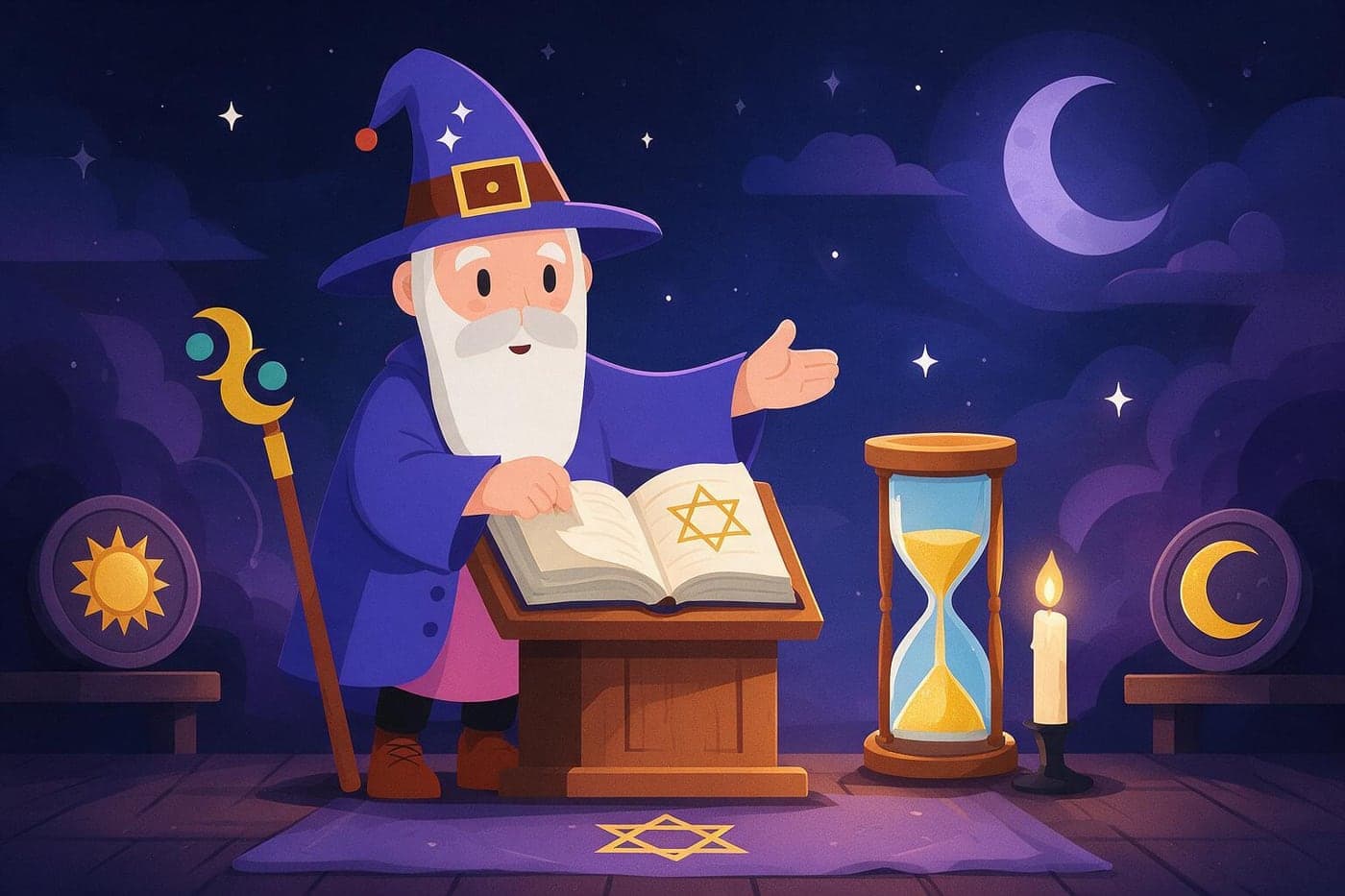
The word grimoire comes from the old French for grammar. That is worth holding onto, because a grammar is not a list of wonderful things you can say. It is the set of rules that decides whether anything you say makes sense at all.
Open the Key of Solomon expecting a book of spells and you will be puzzled. Page after page tells you which hour to begin in, how to bathe, what the pen must be cut from, how many days to fast. The wonders, when they come, are short.
That proportion is the point. A grimoire is a grammar, not a wish list: a working manual of procedure, written for someone who intends to do the thing and needs to know the order it happens in.
Read this preview as text
The word grimoire comes from the old French for grammar. That is worth holding onto, because a grammar is not a list of wonderful things you can say. It is the set of rules that decides whether anything you say makes sense at all.
Open the Key of Solomon expecting a book of spells and you will be puzzled. Page after page tells you which hour to begin in, how to bathe, what the pen must be cut from, how many days to fast. The wonders, when they come, are short.
That proportion is the point. A grimoire is a grammar, not a wish list: a working manual of procedure, written for someone who intends to do the thing and needs to know the order it happens in.
The Key says this about itself in its first lines. Solomon tells his son that every experiment must be prepared exactly as set down, "both day and hour, and all things necessary".
Then he adds the warning that frames the rest of the book: "for without this there will be but falsehood and vanity in this my work". Not weaker results. Falsehood.
So the secret is not hidden inside some rare word you have to find. The preparation is the content. A reader who skims the chapters on hours and linen to get to the conjurations has skipped the part the author thought mattered most, and by his own account has made the rest of it untrue.
According to Solomon's own opening words, what happens if an operation in the Key is done without the proper day, hour and preparations?
- The operator must start the book over again
- The spirits appear but refuse to obey
- It still works, only more slowly and more weakly
- The work becomes falsehood and vanityCorrect answer
Solomon tells Roboam that without the right day, hour and all things necessary "there will be but falsehood and vanity" in his work. The book does not promise a weaker version: skip the preparation and there is no operation at all.
Why Solomon? In the Bible he is the king who, offered anything, asked for wisdom rather than long life or riches. The Key retells that scene: the angel Homadiel comes to him at night and says his prayer was heard because he asked for none of those things.
By the time the Key was copied, Solomon was also the great master of spirits in Jewish, Christian and Arab legend. Mathers points to Josephus mentioning magical works of his, and to the Arabian Nights.
Putting his name on the book is a claim about authority, not only authorship. It says this knowledge came from God through an angel, to a king chosen for his wisdom. Not from a bargain, and not from a demon.
The oldest manuscript Mathers used, a Latin copy from around the end of the sixteenth century, opens with a family scene. Solomon speaks to his son Roboam: "Treasure up, O my son Roboam! the wisdom of my words."
He calls the book a Key because, as a key opens a treasure-house, this alone opens the understanding of the magical arts. Then comes the instruction that matters: make an ivory casket, keep the Key inside it, and when I die, put it in my tomb beside me, "lest at another time it might fall into the hands of the wicked".
And so it was done. The first thing Solomon does with his great book is bury it with himself.
Long after, some Babylonian philosophers come to restore Solomon's tomb, find the ivory casket, and open it with joy. None of them can understand a word, "on account of the obscurity of the words and their occult arrangement".
One of them, Iohe Grevis, throws himself on the ground, weeps, and asks God for the wisdom that was given to Solomon. An angel appears and tells him plainly: the secrets look dark to you because the Lord wished it, so that such wisdom would not fall to wicked men.
Iohe must promise to reveal it only to the penitent, the secret and the faithful. Then he reads again, and the text is clear. The obscurity is deliberate, and it lifts for the one who asks rightly.
Inside the course
12 parts- What a grimoire is, and what Solomon has to do with this oneFree above
- Days, hours, and the virtues of the planets
- The confession the operator must make first
- Conjurations, from courteous to extremely powerful
Questions
Is The Key of Solomon the King free to read in Astra Trainer?
Yes. The full book opens free in the app’s reader, in English, Spanish, German, French, Italian, Polish, Portuguese, and Russian.
What is the short course?
12 short parts that walk through the book’s key ideas in slides, each with a quick quiz. The first six slides are free to try on this page.
Where do I get the app?
Astra Trainer is free on the App Store and Google Play. The Key of Solomon the King is waiting in the app’s library.