Numbers: Their Occult Power and Mystic Virtues
W. Wynn Westcott · 1890
4.8 · 5 ratings
About the book
The Golden Dawn's coroner-scholar walks through the numbers one to ten — and a few enormous ones — gathering everything Pythagoreans, Kabbalists and church fathers ever claimed about each. Not a fortune-telling manual: a learned tour of why numbers were ever thought holy.
Try the short course
Part 1 · The silent school at Croton. The first six slides, free.


1 / 6
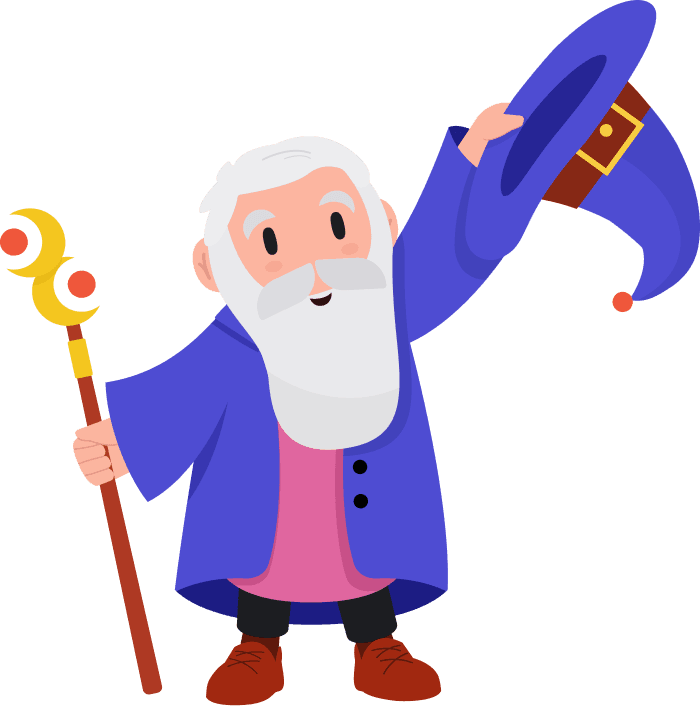
Westcott's Pythagoras starts out as an athlete. Born around 580 B.C., on Samos or perhaps at Sidon, the son of an engraver named Mnesarchus, he won prizes for agility at the Olympic Games, and that is nearly all anyone knows of his youth.
Then he grew dissatisfied with the knowledge at home and left. The travels Westcott lists read like a map of the old world's wisdom: Egypt, India, Persia, Crete, Palestine. In each place, he says, Pythagoras came to know both the popular teaching and the esoteric one kept behind it.
That double layer matters more than the itinerary. The man at the root of Western number mysticism went looking for what the temples told insiders, not what they told crowds, and the school he built would have the same two doors.
Read this preview as text
Westcott's Pythagoras starts out as an athlete. Born around 580 B.C., on Samos or perhaps at Sidon, the son of an engraver named Mnesarchus, he won prizes for agility at the Olympic Games, and that is nearly all anyone knows of his youth.
Then he grew dissatisfied with the knowledge at home and left. The travels Westcott lists read like a map of the old world's wisdom: Egypt, India, Persia, Crete, Palestine. In each place, he says, Pythagoras came to know both the popular teaching and the esoteric one kept behind it.
That double layer matters more than the itinerary. The man at the root of Western number mysticism went looking for what the temples told insiders, not what they told crowds, and the school he built would have the same two doors.
He came home meaning to open a college, but Samos was ruled by the tyrant Polycrates, who stood in the way. So Pythagoras went west to Croton, a Greek colony on the south coast of Italy, and founded his Society of Students there.
In Westcott's telling it became the gathering place of the learned of Europe, and in secret conclave Pythagoras taught what he had collected from the Brahmins, the Egyptian hierophants and the Chaldean Magi. Westcott writes as an occultist here, tracing one hidden wisdom through every ancient tradition.
The school lasted nearly forty years. Then a quarrel between Croton and neighbouring Sybaris grew into conspiracy and rebellion, the institution was ended, and Pythagoras fled to Metapontum, where he is said to have died around 500 B.C.
Joining was not a matter of signing up. Every new member had to pass five years of contemplation in perfect silence first.
Picture what that asks of a person. For five years you hear everything and answer nothing: no objections, no clever questions, no showing what you already know. The lowest students were even named for it. They were the Auscultantes, the listeners.
Westcott does not explain the rule; he simply records it. But its effect is easy to see. Someone who has kept quiet for five years has stopped arguing with a teaching before it arrives, and only a student like that was ready to be given more.
A newcomer to the school at Croton was expected to keep perfect silence for five full years.
TrueCorrect answer
True. Westcott records that every new member had to pass five years of contemplation in perfect silence, which is why the entry grade was called the listeners.
Inside, the students lived as one household. They held everything in common, refused animal food, and believed in metempsychosis, the passing of a soul into a new body after death.
The bond between them was meant to be as close as family. Westcott notes that their saying "my friend is my other self" was still a byword in his own day, some two and a half thousand years later.
None of this is decoration around the mathematics. A group that shares its goods, its table and its loyalty is also a group that can keep a secret, and this one had a great deal to keep.
Here is the detail that surprises most readers. We think of Pythagoras as the man of proofs, the name on the theorem every schoolchild learns. His own pupils worked differently: for them "He said it" was complete proof.
Westcott gives the Greek, autos epha, and says faith entered so deeply into their training that the master's word settled the matter. The students were filled, he writes, with an ardent and implicit faith in their founder and teacher.
So the school held together two things we now keep apart. It studied number with real rigour, and it received doctrine on authority. The arithmetic could be checked by anyone; what the arithmetic meant was handed down, and a listener did not argue with it.
Inside the course
12 parts- Pythagoras, his tenets and his followersFree above
- The Pythagorean view of numbers
- The Kabbalistic view, and gematria
- The Monad: one, and why it is not a number
Questions
Is Numbers: Their Occult Power and Mystic Virtues free to read in Astra Trainer?
Yes. The full book opens free in the app’s reader, in English, Spanish, German, French, Italian, Polish, Portuguese, and Russian.
What is the short course?
12 short parts that walk through the book’s key ideas in slides, each with a quick quiz. The first six slides are free to try on this page.
Where do I get the app?
Astra Trainer is free on the App Store and Google Play. Numbers: Their Occult Power and Mystic Virtues is waiting in the app’s library.