The Rosicrucian Cosmo-Conception
Max Heindel · 1909
4.9 · 7 ratings
About the book
A complete cosmology: seven worlds, seven periods, the whole history and future of the earth and everyone on it, drawn up with the tidiness of an engineering diagram. Heindel wanted a Christian occultism, and this is the blueprint.
Try the short course
Part 1 · Seven Worlds, One Reality. The first six slides, free.


1 / 6
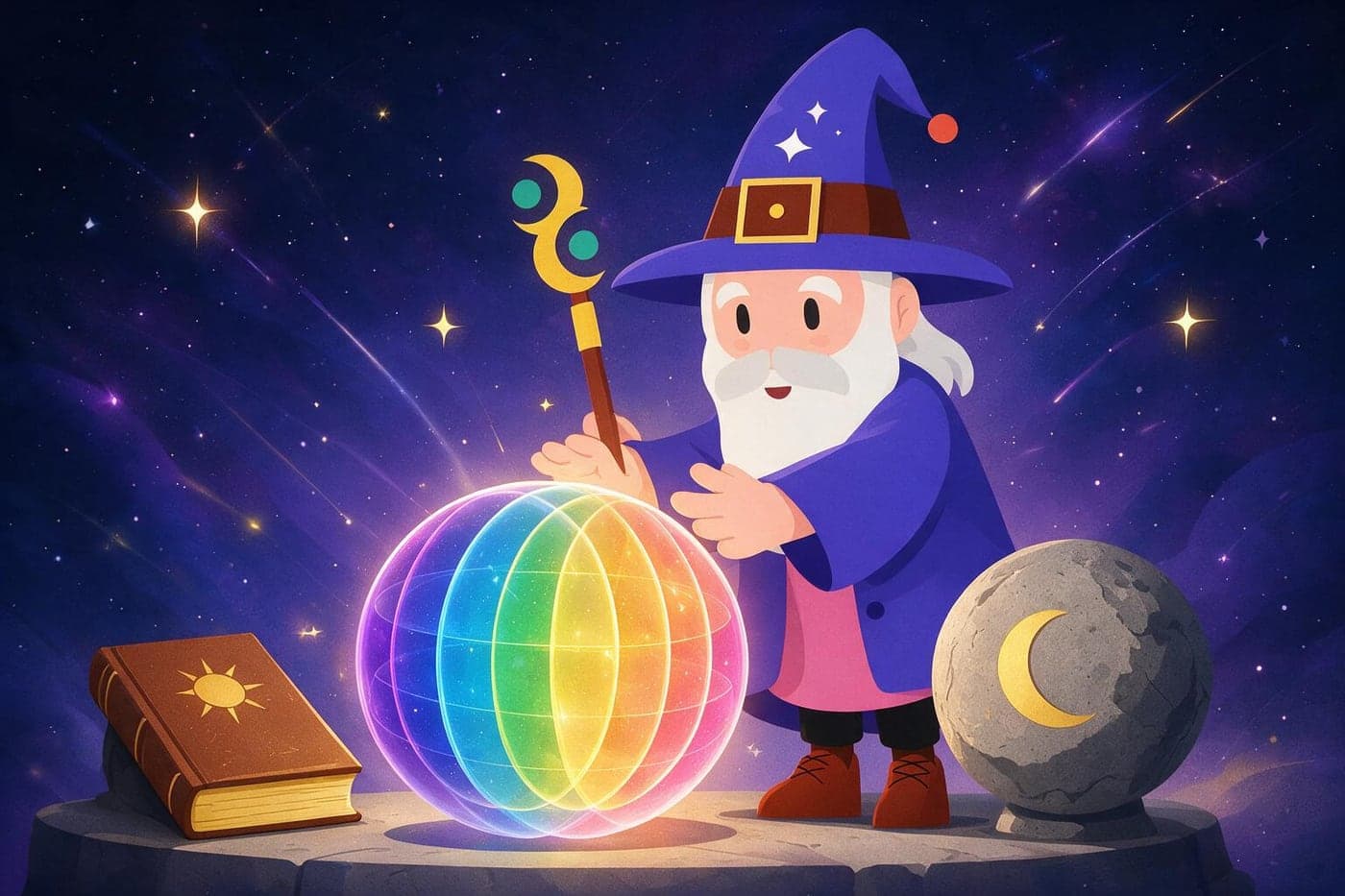
A chart of seven worlds can look like a tower: the Physical World at the bottom, divine realms somewhere overhead. Heindel insists that this picture is misleading if taken as geography. The worlds are not distant floors reached by travelling upward through space.
They occupy the same cosmic field while differing in the fineness of their substance and the consciousness possible within them. The higher worlds interpenetrate the lower, including the physical environment around and within us. The worlds are grades, not places.
Read this preview as text
A chart of seven worlds can look like a tower: the Physical World at the bottom, divine realms somewhere overhead. Heindel insists that this picture is misleading if taken as geography. The worlds are not distant floors reached by travelling upward through space.
They occupy the same cosmic field while differing in the fineness of their substance and the consciousness possible within them. The higher worlds interpenetrate the lower, including the physical environment around and within us. The worlds are grades, not places.
From highest to lowest, Heindel names the World of God, World of Virgin Spirits, World of Divine Spirit, World of Life Spirit, World of Thought, Desire World, and Physical World.
For now, treat these names as coordinates rather than seven subjects to memorize. The important movement is from subtler conditions toward denser ones. Thought, desire, and physical matter belong to different grades of the same ordered cosmos. The chart’s sequence marks degrees of density and consciousness, not mileage from Earth.
What does the vertical arrangement of Heindel’s seven-world diagram primarily represent?
- A route through seven astronomical locations
- A progression from subtler to denser conditionsCorrect answer
- A chronology of seven historical civilizations
- A hierarchy of seven moral achievements
The diagram orders grades of substance and consciousness. Its vertical layout must not be mistaken for physical altitude or astronomical distance.
Heindel does not use “higher” to mean merely noble, imaginative, or symbolic. Each world is composed of what he regards as actual substance, though subtler than the matter detected by ordinary physical senses.
“Finer” therefore describes a condition of matter, not automatic moral superiority. Desire can be selfish or generous; thought can be confused or clear. Their worlds remain higher in the technical sense because their substance is less dense. The sevenfold order is a scale of grades of substance, not a ranking of good people above bad ones.
A wet sponge offers a limited way to picture interpenetration. Water enters the sponge without forcing the sponge to occupy another location. In Heindel’s scheme, subtler grades of matter similarly permeate denser grades.
The analogy must not be pushed too far. A higher world is not a liquid hiding inside physical pores. Its substance follows conditions proper to that world and normally escapes physical perception. Sharing space does not mean sharing properties. Two worlds may be present together while remaining distinguishable by how their matter behaves and how consciousness encounters it.
In Heindel’s cosmology, entering a higher world chiefly means travelling a vast physical distance away from Earth.
FalseCorrect answer
The worlds interpenetrate rather than stand apart by physical distance. Access depends on the relevant mode of consciousness and vehicle, not ordinary travel.
Inside the course
20 parts- The visible world, and the six invisible onesFree above
- The dense, etheric and desire bodies of a person
- The World of Thought, and the ego behind it
- The four kingdoms, and where humanity sits among them
Questions
Is The Rosicrucian Cosmo-Conception free to read in Astra Trainer?
Yes. The full book opens free in the app’s reader, in English, Spanish, German, French, Italian, Polish, Portuguese, and Russian.
What is the short course?
20 short parts that walk through the book’s key ideas in slides, each with a quick quiz. The first six slides are free to try on this page.
Where do I get the app?
Astra Trainer is free on the App Store and Google Play. The Rosicrucian Cosmo-Conception is waiting in the app’s library.